|

CELEBRATE EARTH DAY - EVERY DAY |
|
“Earth Day worked because of the spontaneous response at the grassroots level. We had neither the time nor resources to organize 20 million demonstrators and the thousands of schools and local communities that participated. That was the remarkable thing about Earth Day. It organized itself.”
Senator Gaylord Nelson – Founder of Earth Day
“ My wife and I have spent half our lives, half our adult lives, trying to save special parts of California.”
“Well, perhaps the greatest achievement, and we didn’t know it at the time, was we held an Earth Day in 1970, and out of that Earth Day a lot of students got involved in saving the environment, or trying to.”
Congressman Pete McCloskey – Co-Founder of Earth Day
|
|
|
|
|
Proposed Blue Ridge Snow Mountain National Conservation Area
A Vision for the Future
By Bob Schneider, President, Tuleyome
Carol Kunze, Executive Director, Berryessa Trails
Victoria Brandon, Sierra Club Lake Group
January 6, 2008
|
|
The Blue Ridge Snow Mountain region is an area of over 800,000 acres that provides habitat and critical long-term movement corridors for many species of wildlife, with a level of plant biodiversity that is so high it registers as a “hot spot” for the planet.
Situated north of San Francisco and west of Sacramento, the region includes substantial portions of Lake and Napa counties, as well as areas of Yolo, Colusa and Solano counties. This vast expanse - the wild heart of California’s inner Coast Range – is a mosaic of public lands including wilderness, recreation lands and wildlife areas, and private lands, encompassing undeveloped watersheds as well as working ranches and farms.
Putah Creek and Cache Creek – the two principal water sources – give this diverse place life. Oak woodlands, chaparral, grasslands, riparian habitat and the rare and endemic plants found on serpentine soils, along with the lakes, ponds, creeks and the shear size of the landscape, all combine to sustain healthy populations of tule elk, black bear, mountain lion, bald and golden eagles, ospreys, bobcats, foxes, river otters and many more species, including rare and endangered plants and animals. The ecological interactions among vegetation, wildlife and water support the fertile working landscape of the region. The natural environment also provides water for nearby urban populations and agricultural operations in other areas.
Farmlands and ranches benefit from, and also play a critical role in sustaining, the regional landscape. These rural land uses represent a bulwark against residential and commercial development by providing the economic means for private land owners to remain on the land in a manner that relies on rather than destroys the natural environment.
Public agencies, conservation and recreation interests, and private landowners have been partnering for more than a decade to better manage the public areas, and to support working lands, in this region.
Threatened by Development
The Blue RidgeSnow Mountain region is threatened by encroaching development. Applications for new subdivisions that spread sprawl into this undeveloped area, along with the development of estate homes on acreage that could still be agriculturally productive, are spawning new roads and demands for public services better suited to urban areas. Such developments cause the destruction of important habitat areas and threaten the significant biodiversity in the region, as well as decreasing the amount of farmland that provides both food and jobs.
The Sacramento and San Francisco metropolitan areas are expected to add millions of new residents within the next 10 years, fueling the development engine that already exists in these areas to even higher speeds. The risk is that this region, which feeds and quenches the thirst of nearby urban populations as well as nurturing their souls with access to nature, will itself become an urban area that consumes rather than produces food and water.
An informal partnership founded within in this region has worked hard to protect the natural and working landscape for more than ten years. To withstand the ever-increasing pressures on the values in the region, national recognition of these values is needed.
The Solution: A National Conservation Area
A National Conservation Area designation will represent national acknowledgement of the value of the Blue Ridge Snow Mountain region as both a natural area and a working landscape at one and the same time. The NCA designation will provide a framework to better coordinate the management of public lands within the region, making it easier for farmers and ranchers to work with adjacent public landowners. National recognition as an NCA will also assist in the development of conservation funding that will protect the regional landscape, facilitating efforts to obtain public and private funds to protect both the natural and the working landscapes.
Lacking any formal recognition or framework, the Blue Ridge Snow Mountain region has not had the visibility that would allow it to compete with areas like the Santa Monica Mountains or Lake Tahoe for state and federal resources. The recent $5.4 billion park bond contained no earmarked funds for conservation or recreational facilities in the region. Currently, the area receives little federal funding for preservation of open space, private land stewardship, and agricultural protection. Without a special designation, this region will continue to lose out to the state’s better known icons, making it difficult to carry out needed stewardship projects and to protect the ecological processes and agricultural lands in the region.
What Does an NCA Do?
With a National Conservation Area designation:
- There will be a formal name for this specific geographic area.
- Congress will acknowledge the local and national importance of this region.
- A Public Advisory Committee will be formed to provide official citizen input.
- A coordinated multi-agency management plan for the public lands within the region will be developed, allowing for protection of ecological resources on a landscape level and a region-wide management of public recreation use.
This formal recognition will make it easier to obtain state and federal funds for conservation and environmental stewardship, to support ongoing restoration and enhancement projects, and to develop a recreation program for the entire region that provides access while ensuring protection of the environmental resources in the region.
Although private land in the region, including water rights that adhere to the land, are not affected in any way by an NCA designation, private landowners will have better opportunities to provide input to the management of neighboring public lands through an NCA, including a coherent approach to landscape management that better addresses regulatory compliance issues that may threaten the sustainability of agricultural lands in the region. Local and state governments and agencies will also retain their decision-making authority.
How Can We Make It Happen?
The Blue Ridge Snow MountainNational Conservation Area is not yet a reality. Still, a growing number of organizations and individuals recognize the values in the region and are calling for its protection. With your help it can happen.
The final boundaries of the NCA have not been determined but they will be based upon biological and cultural assessments to encompass the Blue Ridge Snow Mountain region’s most unique and invaluable natural environment, its cultural history and its agricultural heritage.
It will take folks like you to make this proposal a reality. Share the story of the Blue Ridge Snow MountainNational Conservation Area proposal with your friends, organizations and businesses. For more information email us at info@tuleyome.org.
|
|
|
|
|
Davis Enterprise Covers Teen Rafting |
|
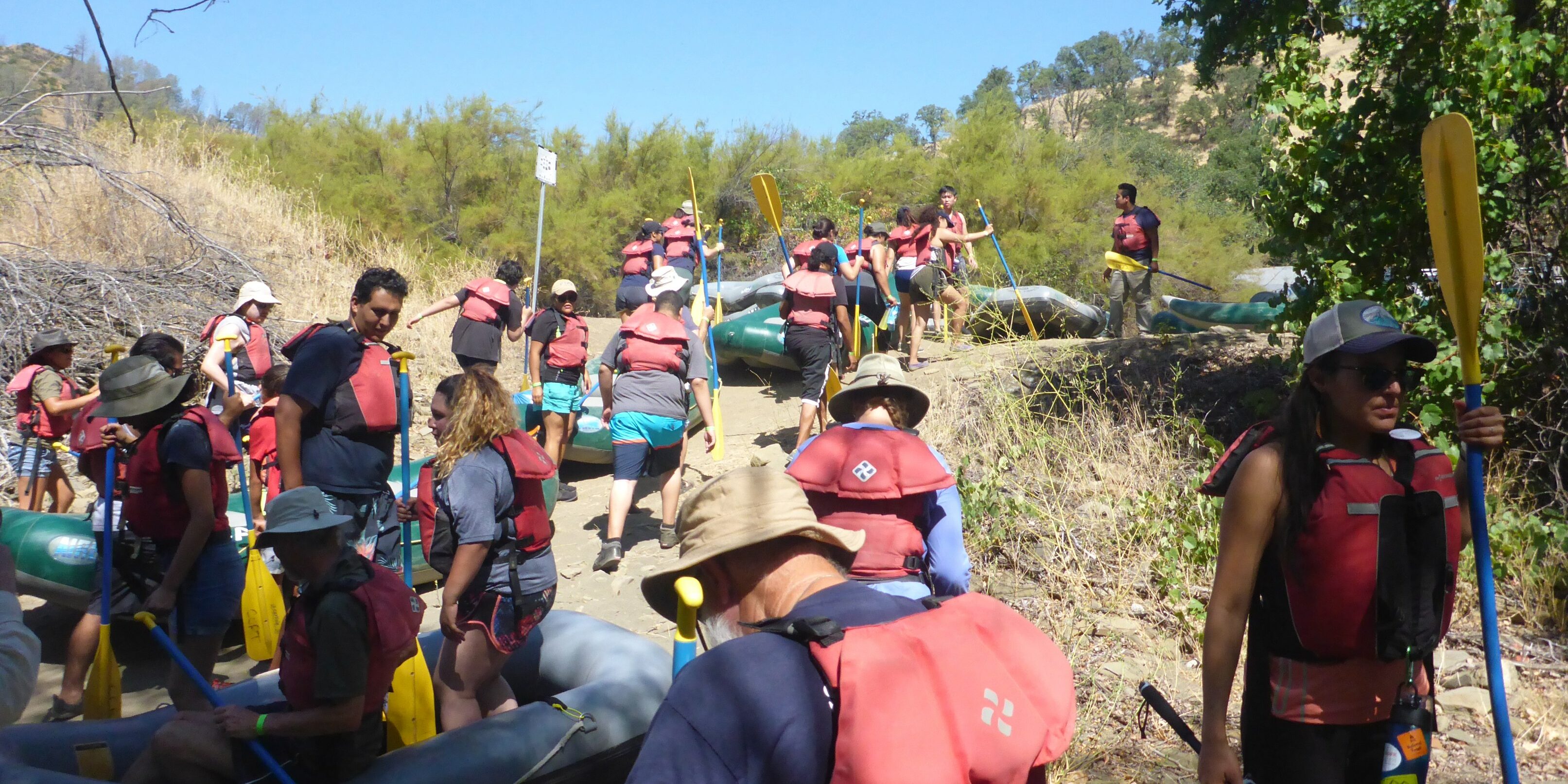
A special thanks to the Davis Enterprise for spotlighting Tuleyome's Teen Rafting Program.
If you are interested in volunteering please fill out the volunteer application
|
|
|
|
Posted Tuesday, 07 August 2007
|
New Tuleyome Tales Posted to Library |
|
Saving Biodiversity can Begin at Home
by Glen Holstein, PhD.
We increasingly know we need to save the world’s great biodiversity hotspots like coral reefs and tropical rainforests, but how many Californians know our own state is also regularly on inventories of top world biodiversity hotspots? When compared to other states, California’s biodiversity is truly outstanding. It is first in diversity of native plants, mammals, and all species; fourth in breeding birds; fifth in all vertebrate species; sixth in reptiles; twelfth in amphibians; and thirty-first in freshwater fish. Unfortunately, California ranks much higher for endangered and threatened species. It is first for plants, mammals, amphibians, all vertebrates, and all species; second for breeding birds; third for reptiles; and even eighth for freshwater fishes.
|
|
Read More...
|
|
Posted Sunday, 05 August 2007
|
Cache Creek Wilderness Run Map |
|
Berryessa Trails has just posted a map of the Cache Creek Wilderness Run perfect for kayakers and rafters.
|
|
Check it Out...
|
|
Posted Friday, 13 July 2007
|
Update on Fremont Weir Wildlife Area Access |
|
Thanks to everyone who wrote letters in support of keeping the eastern public access road (Road 16) open!
The next step is for County staff to prepare an environmental report and have a public hearing. We will alert everyone when the hearing will occur. After that, the staff recommendation on the abandonment will go to the Planning Commission, then the Board of Supervisors. Right now, the earliest that we are hearing the next meeting will occur is in August, with the Board of Supervisors hearing in September or October.
As soon as dates are known, we'll pass them along. It's important to continue to write and remind your Supervisor of the importance of keeping the road open, to allow for access to the east side of the State Wildlife Area. This is our only access to the Toe Drain fishing area that is so popular with Yolo residents from West Sacramento, Woodland, Davis, and beyond.

|
|
|
|
Posted Thursday, 12 July 2007
|
Creek Speak
|
|
Community Talks on the Putah Creek Watershed
CREEK SPEAK is a series of community talks on nature, art, science and culture in the Putah Creek watershed held on the second Thursday of each month, June through November 2007, at the Winters Community Center located at 201 Railroad Avenue, in downtown Winters. Each talk will run approximately one hour from 7:00 to 8:00 pm with time for questions afterwards. The purpose of the Creek Speak series is to share knowledge about the natural and cultural resources of the Putah Creek watershed and to inspire audiences to actively explore the watershed we live in. Talks will be interactive and engaging and include information about associated events.
Save the Dates:
- June 14 -- Putah Creek Rocks! Dave Osleger, UCD Geologist.
- July 12 -- Hydrology of Putah Creek. Eric Larsen, UCD Geomorphologist.
- Aug 9 -- Farming in our Watershed. Craig McNamara, Local Walnut Grower.
- Sept 13 -- Building Monticello Dam. Suzanne Butterfield, General Manager & Don Burbey, Solano Project Senior Supervisor, Solano Irrigation District.
- Oct 11 -- Berryessa Valley: A History. Mike McGraw, U.S. Bureau of Reclamation.
- Nov 8 -- Return of the Salmon. Peter Moyle, UCD Fish Biologist.
Creek Speak is sponsored by the Putah Creek Council, UC Davis John Muir Institute of the Environment, Putah Creek Discovery Corridor Cooperative, and the City of Winters. For more information visit PutahCreekCouncil.org
June Creek Speak Presentation
Putah Creek Rocks
The series will kick off Thursday, June 14th, with "Putah Creek Rocks!" a presentation from Dave Osleger, UC Davis geologist. He will talk about the unique geology of the area and answer such questions as: How was Putah Creek formed? What's under our feet and how old are those rocks? Join us from 7:00 - 8:00 P.M at the Winters Community Center.
|
|
|
|
Posted Thursday, 07 June 2007
|
Tuleyome is now on Giveline! |
|
Introducing Giveline as a new way to support Tuleyome!
Giveline.com is an online store created for the community-minded shopper, offering more than a million bestselling products including books, movies, music, electronics, housewares, gifts and more. Every purchase generates a substantial donation to Tuleyome - an amazing average of 16% of store sales, sometimes as high as 33%. Giveline has great products, great service, and great prices - the only difference between Giveline and other major online retailers is that every purchase earns money for our organization. Check it out today, and if you decide to buy, remember that Tuleyome will earn significant funds in support of our mission!"
|
|
Shop on Giveline...
|
|
Posted Friday, 27 April 2007
|
Access to Yolo Wildlife Area Threatened |
|
Every once in a while, between great hikes and soaking up the beauty of Yolo County, we have something come up that if left unattended, could preclude future enjoyment of some of our wonderful outdoor areas.
This is one of those times.
There is a request by a landowner to have the County abandon a portion of Road 16, located east of the Yolo Bypass and north of I-5 The road provides current access to the Fremont Weir State Wildlife Area, and could be used in the future as an access to a trail network on the levee system. Your comments are needed to ensure we don't lose access to this great wildlife area, from the eastern side. You can download a map and images of the public wildlife area. Please take a minute to keep this area open!
Please send comments supporting keeping Road 16 as a public right-of-way, to:
Comments are due before May 29th!
Also send a copy of your comments to your County Supervisor.
Mike McGowan (West Sacramento):
mike.mcgowan@yolocounty.org
Helen Thomson (Davis, West Davis, Binning Tract):
helen.thomson@yolocounty.org
Matt Rexroad (Woodland):
matt@rexroad.com
Mariko Yamada (East Davis, South Davis, El Macero):
mariko.yamada@yolocounty.org
Duane Chamberlain (Esparto, Winters, Capay Valley, Yolo, Zamora, Knight’s Landing):
duane.chamberlain@yolocounty.org
Sample Letter:
To whom it may concern,
As a Yolo County resident, I enjoy our wide open spaces and diverse landscapes. Access to those landscapes, be it visually or recreationally, is very important.
The May 7, 2007 request to abandon a portion of Road 16 (Project Title: ZF#2007-030/Road Abandonment), will result in loss of public access to the east side of the Fremont Weir State Wildlife Area. The loss of this access will preclude future use of the levees as recreation corridors for hikers, bikers, horseback riders, and fishermen. It will preclude connection of the Fremont Weir State Wildlife Area to the Greater Delta Recreation Trail.
The recently completed Yolo County Parks Master Plan talks about the County providing ‘gateway’ facilities, to allow access to other agencies land holdings, such as the Fremont Weir State Wildlife Area. The Open Space Element of the General Plan identifies the Yolo Bypass (of which the Fremont Weir is a part) as an open space and recreation resource. Abandoning Road 16 goes against the spirit of both parts of these plans.
Please vote to keep Road 16 a public road. We have nothing to gain by abandoning it, but lots to lose.
Sincerely,
[Your Name]
|
|
Download Map & Photos
|
|
Posted Tuesday, 22 May 2007
|
Cache Creek Discovery Day |
|
Cache Creek Discovery Day will be held from 9AM to 3PM on Saturday May 19, at the Bureau of Land Management's new Cowboy Camp day use area on State Highway 16. It's being hosted by the Cache Creek Watershed Forum, which is a tri-county collaboration including Lake, Yolo, and Colusa county governments, along with tribal, environmental, and agricultural groups who share a collaborative vision for the Cache Creek watershed.
The event is planned as a day of fun, discovery, and celebration for all ages featuring numerous activity centers, short hikes, demonstrations and displays covering the gamut of natural and human topics within the watershed: wildlife tracking, creek critters, natural weed control, native vegetation, native American basketry, local human history and more, all led by local experts in their respective fields. There will be live music during lunch (with a solar-powered sound system) -- bring a picnic, or purchase BBQ food provided by Lake Co. 4-H members.
YoloHiker's Sam Bledsoe will be one of hike leaders for the event.
More info at http://www.yolorcd.org/news-and-events/cache-creek-discovery-day-event-may-2007/
|
|
|
|
Posted Tuesday, 15 May 2007
|
"The Land" Earthday Celebration a Success! |
|
On Friday and Saturday evening Tuleyome supporters were treated to special evening of poetry, music and theater, along with thought-provoking discussion of the environmental challenges that face the wrold today. After presentations by noted poet and educator Francisco X. Alacón, Salvador Ramirez from the National Hispanic Environmental Council and former congressman Pete McCloskey, Jazz Pianist Olivier Stern entertained the crowd with excerpts from his new CD "Generations" to be released later this year. In the background a slide show if inspiring images from the regions natural heritage were shown.
The highlight of the evening however was the inspiring production of "The Land" by David Marquis. True to it's billing, the play was small, with only two actors and minimalist set design, but very powerful. The Land depicts a conversation between a man and Mother Nature. Over the course of the play, he experiences the full range of human reactions when presented with the beauty and bounty of the Earth, from greed to simple indifference to the joy of experiencing a true relationship with the natural world.
Much of the work was done by tireless volunteers and very generous sponsors. We wish to sincerely thank those of you who helped make this extraordinary event a reality, thank you.
 |
 |
 |
 |
 |
|
|
|
| More Sponsors: |
Creative Catering |
First Northern Bank |
Paco's Restaurant & Catering |
Davis Joint Unified School District |
| Hallmark Inn, Davis, CA |
Cache Canyon Rafting |
| Cantina Del Cabo |
Woodland Joint Unified School District |
|
|
|
|
Posted Tuesday, 24 April 2007
|
New Tuleyome Tales Posted to Library |
|
Ravenna Grass: A Major Wildland Weed
by Craig Thomsen & Tanya Meyer
Cache Creek natural communities are under assault by another wildland weed. A massive invasion of an escaped ornamental--Ravenna grass (Saccharum ravennae)--is underway along the Cache Creek corridor in Lake and Yolo counties. It is one of the largest exotic grasses in the state, with tussocks reaching 5 feet wide and flowering stalks 12 feet tall.
Ravenna Grass occupies riparian sites similar to those inhabited by two other well-known invasive plants, tamarisk (Tamarix parviflora) and giant reed (Arundo donax), but has also moved into upland areas such as roadsides, cut-banks, and steep slopes in Rumsey Canyon. Individual plants produce thousands of seeds that disperse by both wind and water.
|
|
Read More...
|
|
Posted Sunday, 04 March 2007
|
New Tuleyome Tales Posted to Library |
|
Our Secretive Neighbor
by David Chase
On any given spring or summer day you might be walking across the concrete bridge at Cache Creek Park and hear the familiar sound of what could be mistaken for a young child tossing rocks into the creek. Plop! But when you look around the only thing that you might notice would be the ripples spreading out from the shoreline boulder from which a wily turtle slipped off of, swiftly descending into the cold depths of his sheltered home in the bottom of the creek.
|
|
Read More...
|
|
Posted Sunday, 04 February 2007
|
Tuleyome Supports Designating Highway 16 as a Scenic Highway |
|
If you have driven up Highway 16 through the Capay Valley you know that the road is among the most beautiful anywhere. Even with the additional traffic added by visitors to the casino, this is still a rural and peaceful valley. This could change, under a plan included in a Draft EIR by Cal Trans to “upgrade” Highway 16. Under the proposed design, Highway 16 would be flattened and straightened from I-505 to the casino, and would be designed and built to accommodate traffic at 65 mph. This would involve widening the road by 2.5 to 3 times its current width, using 170 acres of farmland, destruction of 10 dwellings, and cutting down nearly 700 mature oak and black walnut trees --- at an estimated cost of $51 million.
There is an alternative to this urbanization of the Capay Valley, and that is the proposal of the Capay Valley Coalition (CVC) to designate Highway 16 as a “Scenic Highway.” Tuleyome has agreed to co-sign a letter from the CVC and other organizations to elected representatives urging an alternative that would preserve the rural nature of the Capay Valley. This alternative proposes to maintain the existing roadbed, but also add several features to take traffic safety into account, including: construction of a 2-4 foot shoulder, providing occasional pullouts for slower vehicles and school buses, resurfacing with noise reducing materials, and ending the project at the casino stoplight.
For more information, you can contact Anne McDonald, President of the Capay Valley Coalition, at apym@gvni.com.
|
|
|
|
Posted Friday, 26 January 2007
|
Tuleyome Urges Supervisors to Consider Global Warming in General Plan Update |
|
Yolo County is updating its General Plan. This is a critical document for the future and Tuleyome has been actively participating in the public discussion. The last comprehensive overhaul was completed in 1983. As we undertake the process to bring the General Plan into the 21st century, Tuleyome believes that county leaders and planners need to acknowledge that while our previous planning processes have been primarily responsive to local pressures, such as growth along the I-5 and I-80 corridors, we must now account for changes resulting from global pressures, one of which is global warming. Whether we agree or disagree about its causes, the science is now incontrovertible that it is upon us.
However, the specific effects of climate change on local regions like Yolo County are still largely unspecified. For example, we just don’t know if we will have more rainfall or less, and what effect either result might have on water supply, on flooding, on agriculture, or on the fate of conservationally important habitats or species. What we do know is that while some of the solutions to global warming will clearly require the actions of nations and large multinational corporations, but there are also critical roles for individuals and local governments to play.
Tuleyome believes that the issue of global warming is of sufficient importance and immediacy that the county should address its potential impacts in the General Plan Update process. Ideally, this General Plan Update would include actions the county could take now to reduce its own greenhouse gas emissions. In addition, the Update should incorporate an adaptive response to any local consequences of global warming, in responses to the changes that do occur in rainfall, flooding, and other climate-related processes that affect local citizens. These responses should be addressed as an overriding concern for the Update as well as in policies and programs in the various Elements of the General Plan.
Tuleyome is concerned, however, that the county may not yet be in a position to address these complex issues – there has been little or no analysis or discussion of this issue in the Update development process to date. Tuleyome does not believe that the requisite analyses have been done in order to achieve a consensus as to what actions the county and its citizens could or should take.
Therefore, Tuleyome has recommended that the Board of Supervisors appoint a Select Committee on Climate Change, reporting directly to the County Administrative Officer, to provide recommendations to the Board concerning both short-term actions and possible longer-term strategies. |
|
Read More...
|
|
Posted Thursday, 25 January 2007
|
Yolo County Adopts Oak Woodland Conservation and Enhancement Plan |
|
At its January 16th meeting, the Yolo County Board of Supervisors adopted a plan to encourage voluntary efforts to preserve oak woodlands in the county. The plan notes that oak woodlands cover about 107,000 acres, a little over 16% of Yolo County, primarily in the foothills of the Coast Range in the western portion of the county. Oak “stands” covering an acre or more will be targeted for this program. Acknowledging that approximately 87% of Yolo’s oak woodlands are privately owned, the plan proposes voluntary participation by landowners, and sets forth financial incentives and public education programs to reach its goals. Among the financial incentives are grants for “oak woodland enhancement activities” such as planting seedlings and providing fencing to manage damage from livestock, as well as cost-sharing incentives for private landowners to enter into long-term conservation easements.
The plan, developed in conjunction with Phytosphere Research, can be obtained at http://www.yolocounty.org/prm/events.htm.
|
|
|
|
Posted Wednesday, 17 January 2007
|
New Tuleyome Tales Posted to Library |
|
Finding our Sense of Place in Yolo County
by John Mott-Smith
The Central Valley where we live is a part of the route for bird migration that is the Pacific Flyway, but there is another kind of migration taking place, a human migration. Though there are still many “old timers” in the area, many of us weren’t born here; we came from someplace else. We came because of the university, or the state government, to get away from the congestion of the Bay Area, because housing is more affordable, or for all of these reasons and many others. In my case, I came to Davis from Santa Cruz in 1979, leaving the mountains, ocean and forests that defined my sense of place. Before then, my views of Yolo County were through a car window as I traveled from the Bay Area to the Sierra Nevada. I remember feeling a bit bereft of natural beauty, of a loss of my sense of place, when I came here to live, and of winning a letter writing exchange with a friend in Australia over who could best complete the sentence, “Where I live is so flat that …”
Time changed that. I now feel a deep sense of rootedness, of place, and I have found that many of those who came and stayed here have had a similar experience, and share a profound feeling of attachment to the region. This is more than just settling down here; marrying, working, raising a family --- what we typically think of as “putting down roots.” It is also a connection to the region, to the land itself. Where does this sense of place come from?
[Photo courtesy Dave Pratt]
|
|
Read More...
|
|
Posted Sunday, 03 December 2006
|
North Coast Wilderness Bill Becomes Law! |
|
This is great news! Read the press release from California Wild:
Locals Cheer Long Anticipated Conservation Measure
WASHINGTON, DC – Constituents, businesses, organizations, and activists enthusiastically greeted the signing of the Northern California Coastal Wild Heritage Wilderness Act (H.R. 233/S. 128) into law today. The critical conservation measure designates roughly 275,000 acres in California’s North Coast as wilderness and grants wild and scenic status to 21 miles of the Black Butte River. This momentous occasion caps years of leadership and dedication demonstrated by Rep. Thompson (D-Napa Valley), and California Senators Barbara Boxer (D) and Dianne Feinstein (D).
The Northern California Coastal Wild Heritage Wilderness Act designates key landscapes in Del Norte, Humboldt, Lake, Mendocino, and Napa counties as wilderness and protects segments of the Black Butte River as a wild and scenic river. Areas of special value include the King Range, which includes the longest stretch of undeveloped coastline in the contiguous United States and the Cedar Roughs proposed wilderness, which shelters the largest grove in the world of the rare Sargent cypress. Endangered and threatened species whose habitats are now protected by the bill include the bald eagle, California brown pelican, steelhead trout, coho salmon, northern spotted owl, and Roosevelt elk.
“Permanently protecting some of Del Norte County's remaining wild places is a boon to the local region and the entire North Coast,” said Del Norte County Assessor Gerald Cochran. “The Siskiyou Wilderness is a strong driver for our economic development, which is increasingly relying on tourism and outdoor recreation on our public lands. Adding to this protected area helps preserve our cultural, economic, and recreational values. I thank Congressman Thompson and Senators Boxer and Feinstein for their leadership.”
Countless community, business, and political leaders came forward to support the North Coast bill throughout the course of its progress.
“The signing of the North Coast wilderness bill demonstrates the power of combining broad-based local support with strong political leadership,” stated Traci Sheehan, Campaign Director for the California Wild Heritage Campaign. “It took nature millions of years to create these natural wonders along the North Coast. Now, thanks to local citizens, Congressman Thompson and Senators Boxer and Feinstein, generations of people will enjoy these beautiful places in their wild state for many years to come.”
For more information on the wild places included in this legislation, please visit www.californiawild.org. For photos of wild places included in the Northern California Coastal Wild Heritage Wilderness Act, please contact Derek Chernow, Communications Director, at (916) 442-3155 x207 or derek@californiawild.org.
# # #
The California Wild Heritage Campaign (www.californiawild.org) is a non-partisan, broad-based coalition of everyday citizens who share a common goal of ensuring the permanent protection of California's remaining wild lands and rivers. We are business-owners, anglers, hunters, vintners, scientists, outdoor enthusiasts, people of faith, conservation groups, and much more.
|
|
|
|
Posted Tuesday, 17 October 2006
|
Tuleyome Purchases the Ireland Ranch |
|
Tuleyome recently purchased the Ireland Ranch from the Ireland family, who are fifth generation Yolo County residents. The 640-acre ranch is located in the Blue Ridge abutting 9100 acres of public lands managed by the Bureau of Land Management as the Berryessa Peak unit. The Blue Ridge, a section of the inner coast range in western Yolo County, runs northwest from Putah Creek to Cache Creek.
The Blue Ridge is a dynamic result of plate tectonic forces that steeply uplifted sandstone and shale rock layers creating beautiful interior valleys, creeks and springs. Oak woodlands, gray pine woodlands, chaparral, riparian habitat, and grasslands are the dominant habitat types and mountain lion, black bear, deer, bobcats, eagles and falcons make their home in the mountain range. The ranch forms the headwaters for Enos, Salt and Pine Creeks and includes the location of the historic Scott homestead.
|
|
Read More...
|
|
Posted Friday, 21 July 2006
|
Tuleyome Awards Senator Mike Machado &
Supervisor Helen Thomson
|
|

Tuleyome held an award presentation on October 4, 2006, at their office in Woodland, CA. honoring three individuals that played key roles in the designation of Cache Creek as a State Wild and Scenic River. Presentations of wooden rafting paddles engraved with the Cache Creek Wild and Scenic tag line were made to State Senator Mike Machado and Supervisor Helen Thomson. Tuleyome Board member and Yolo County farmer Helen McCloskey was absent but was also awarded for her contribution in support of the bill.
Senator Machado stated; “Cache Creek is a viable natural resource for Yolo County and the Wild and Scenic designation shows what a few people can achieve when they join together.”
One year ago on October 6, 2005, Governor Arnold Schwarzenegger signed Assemblymember Lois Wolk’s bill (AB 1328) to protect upper Cache Creek as a State Wild and Scenic River for future generations. This 30 mile stretch of the river is home to bald eagles, osprey and tule elk. There are steep canyons where black bear and mountain lion roam and river otter frolic as the river flows through oak woodland, chaparral and riparian forests.
"Senator Machado voted for protecting the South Yuba River when he was in the Assembly in 1999 and he was a major supporter of the Cache Creek Wild & Scenic River bill in 2005. Friends of the River greatly appreciates his support for the continued expansion of the California Wild & Scenic Rivers System," said Steve Evans, Conservation Director of Friends of the River.
“Assemblymember Lois Wolk and her staff spearheaded this campaign,” said Bob Schneider, President of Tuleyome. Supervisor Helen Thomson worked hard to protect Cache Creek while ensuring that the concerns of Yolo County residents were addressed. And, Helen McCloskey, Rumsey farmer and now also a Tuleyome Board member, was always there testifying and working to ensure that this was a bipartisan campaign. Hundreds of volunteers worked on the campaign and we could not have done this without them. We appreciate their efforts.”
|
|
|
|
Posted Wednesday, 04 October 2006
|
Cache Creek Gathering Photos |
|
We had our 1st Annual Cache Creek Gathering on the weekend of September 16th/17th to celebrate Tuleyome's achievements this past year, such as the successful Cache Creek Wild & Scenic River Campaign, Tuleyome's purchase of the Ireland Ranch, and the new management plan for Lake Berryessa (among others).
At the event Tuleyome honored volunteers Maria Tebbut, Robin Souza, and Sam Bledsoe for their outstanding work this year.
Over 60 Tuleyome members gathered to toast last year's successes, and to look forward to making an even bigger difference in the year to come.
Here are some photos of the event:

 
|
|
More Photos...
|
|
Posted Tuesday, 26 September 2006
|
Teen Rafting Photos are In! |
|
This is the second year since Tuleyome began the Teen Rafting project. It started as vision to take local teens out onto Cache Creek who would otherwise not have had a chance. Last year, Tuleyome formed a partnership with Collings West Sacramento Teen Center to take the teens at the center rafting. In addition to the Teen Center, this year Tuleyome also partnered with the Woodland YMCA to take additional young adults on its trips.
The young adults go down the river in rafts built for two persons. The rafts are donated for each trip by Rick Wilson, owner of Cache Creek Canyon rafting. In each raft, the teens choose who will be the captain and in charge of the “ferry” angle and who will be the first mate. The two-person rafts allow them to take a very active role in their own experience as well as learn skills such as teamwork and good communication.
|
|
See more photos...
|
|
Posted Monday, 07 August 2006
|
SUCCESS! Cache Creek a Wild and Scenic River! |
|
Governor Signs Legislation to Protect Popular Rafting and Recreation Destination
Sacramento - California reinforced its commitment to preserving the Golden State's wild heritage today, when Governor Arnold Schwarzenegger signed a bill that will add approximately 31 miles of Cache Creek, flowing primarily through public lands in Lake and Yolo Counties, to the California Wild & Scenic Rivers system.
Authored by Assembly member Lois Wolk (D-Davis), the Cache Creek bill received bipartisan support from county supervisors and city councils, dozens of businesses, conservation groups and scientists throughout California.
"This bill protects the environment and the water rights of many diverse stakeholders. The Governor did the right thing, not only for local residents, but for all Californians" added Ed Robey, Chair of the Lake County Board of Supervisors.
Wild and Scenic designation grants permanent protection to Cache Creek, prohibits new dams and water diversions, and helps protect wildlife, fisheries and the recreational opportunities Cache Creek provides for rafters, anglers, hikers and others. Designation will not affect the current management plans, invasive plant removal or mercury pollution abatement efforts.
|
|
Read More...
|
|
Posted Thursday, 05 April 2006
|
Davis Enterprise Covers Cache Creek WSR Status |
|
Elisabeth Sherwin writing for the Davis Enterprise:
"WOODLAND - The Yolo County Board of Supervisors gave the nod to a former colleague on Tuesday, voting to support Assemblywoman Lois Wolk's wild and scenic rivers bill.
...The board wants to make sure that local control over the creek is not lost, that the existing water rights are protected, that no dams will be built on Cache Creek, and that invasive weeds can be removed and mercury monitored without interference.
But as long as those conditions are addressed in the coming months, the board agreed to support her efforts. AB 1328 would preserve and protect for public benefit 30 free-flowing miles of Cache Creek from a quarter-mile below Cache Creek Dam to Camp Haswell."
|
|
Read More...
|
|
Posted Thursday, 16 March 2006
|
|
|