
November K-12 Field Trips

Geoff Benn • December 3, 2025

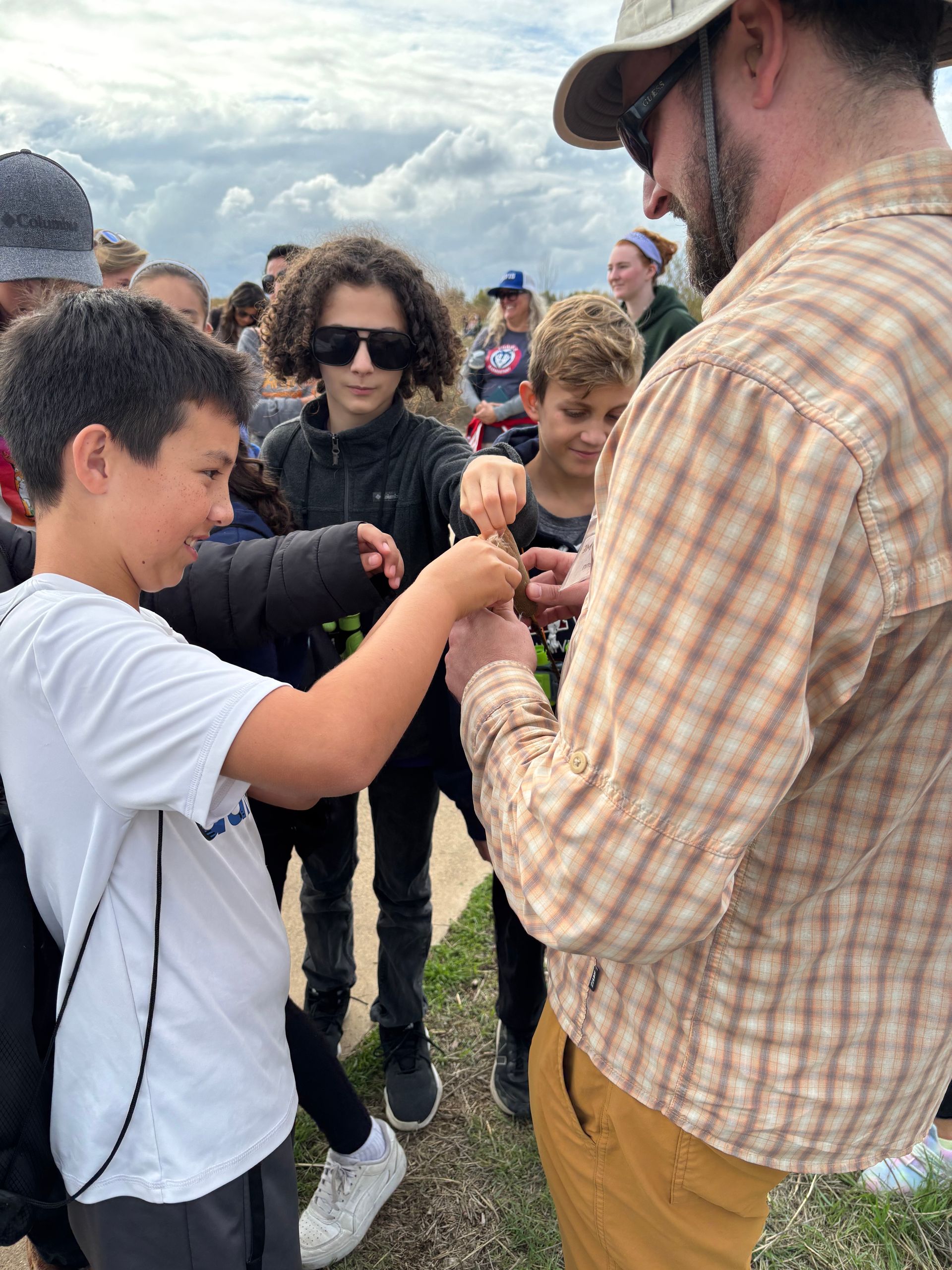
Education Associate Geoff Benn demonstrating how cattails disperse seeds to 5th graders from Cesar Chavez Elementary


Our Fall K-12 field trip season was in full swing in November, with seven classes (188 kids) visiting Woodland Regional Park Preserve for field trips led by Tuleyome. All of the trips included a bird walk with binoculars and activities from one of Tuleyome’s seven educational Trails (Adaptations, Ecosystems, Evolution, Land, Sun, Water, and Weather). November was a fun month for bird watching at the Preserve, as our resident white-tailed kites have been active and seem to enjoy showing off for tour groups!
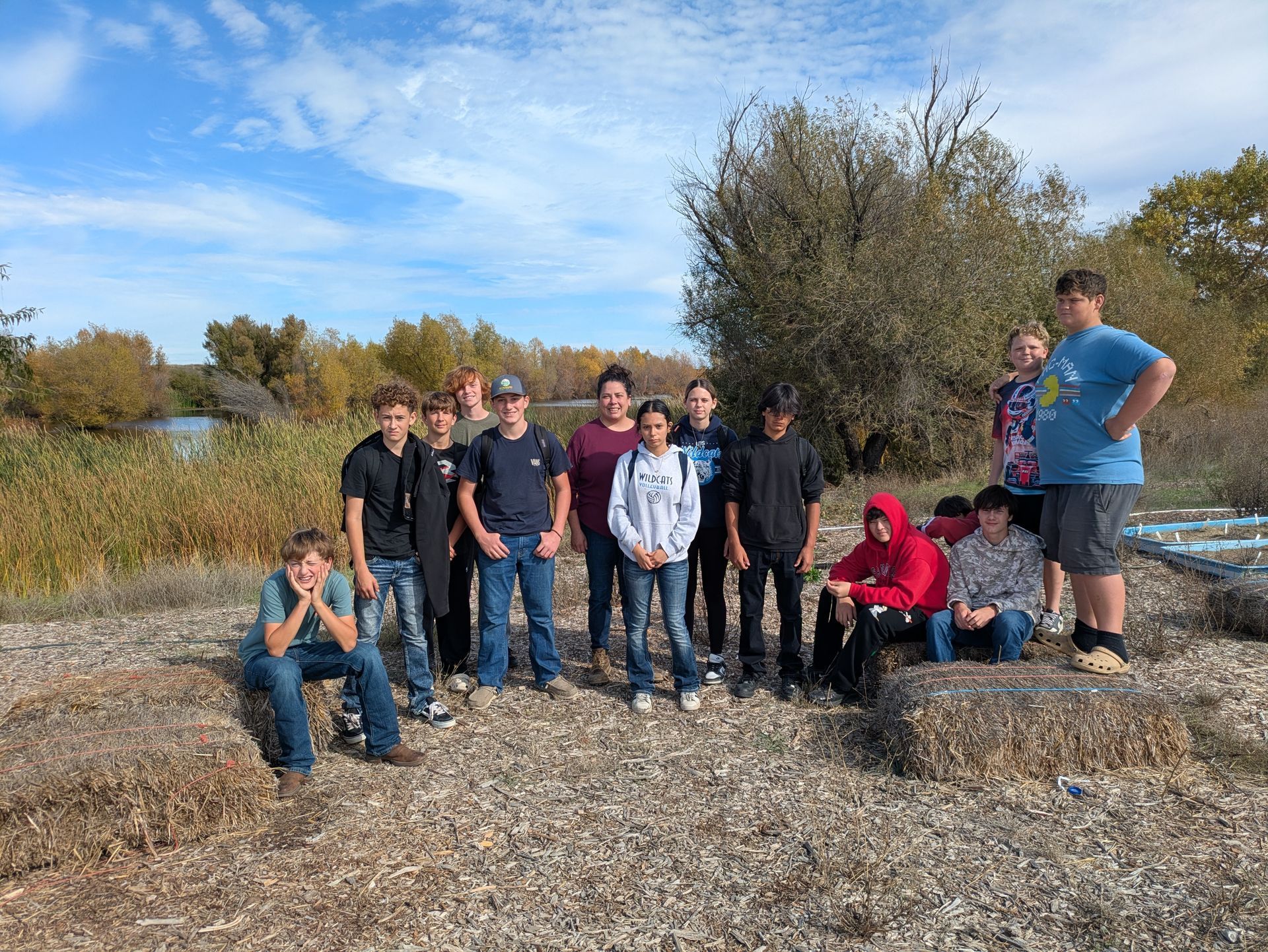
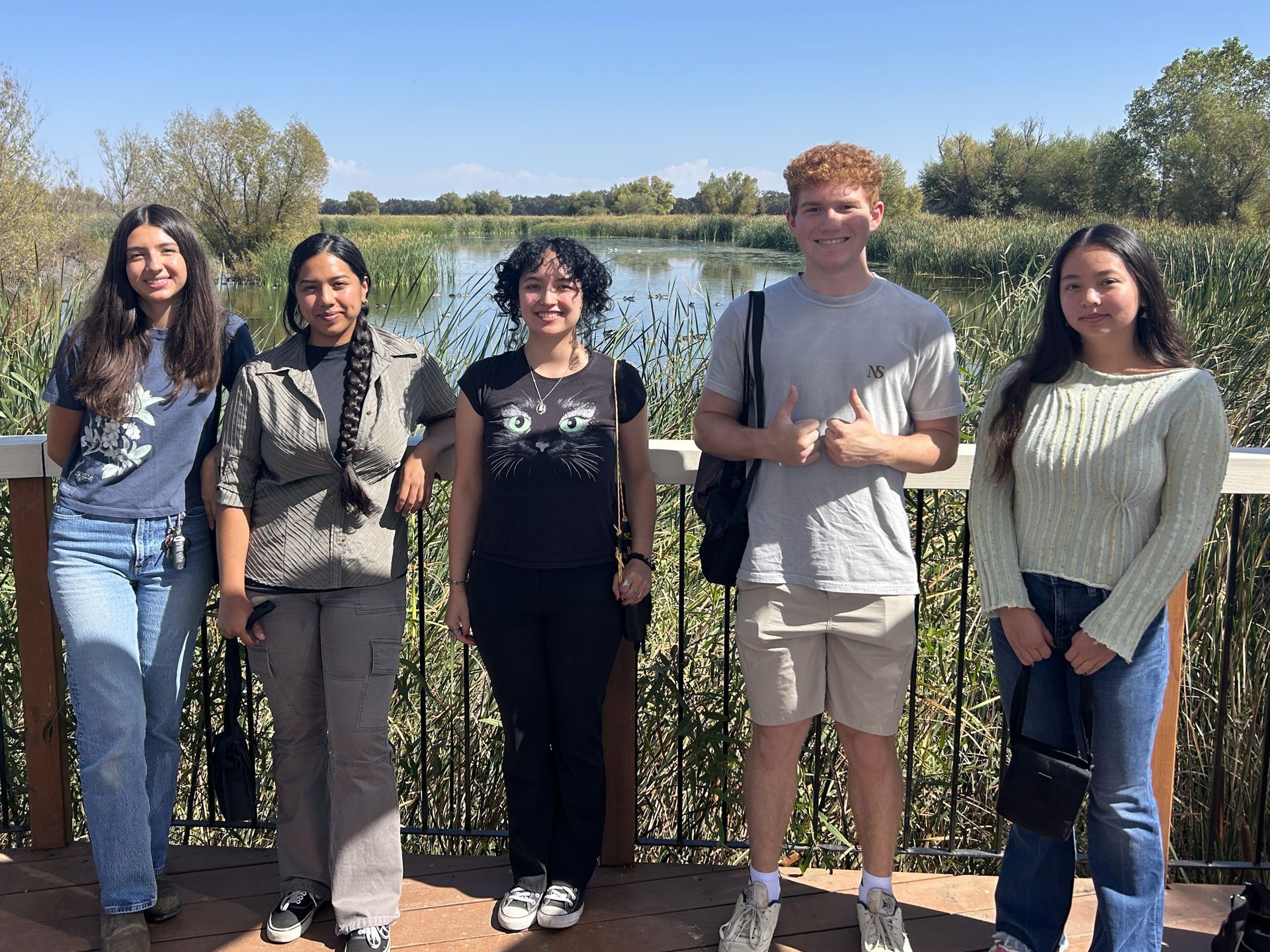
Lee Middle School 8th graders pose for picture at the end of their field trip


Our first trip of the month was on November 4th, with a class of 8th graders visiting from Lee Middle School in Woodland (this was our first group from Lee!). The students completed our middle school Adaptations Trail, which included identifying plants and animals at the Preserve and playing our out-competed game where students collect resource cards with different “adaptations” that provide advantages or disadvantages.
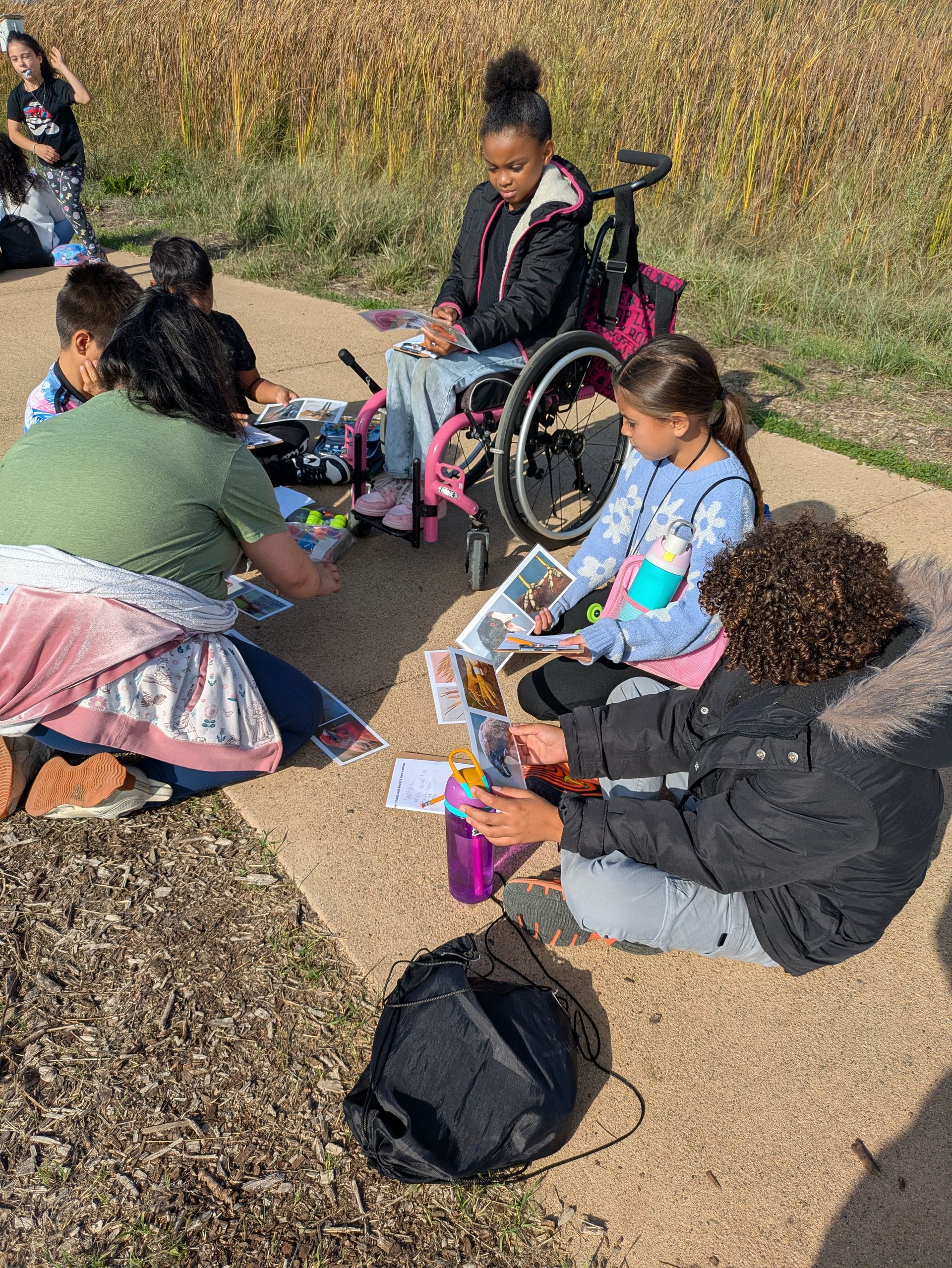
Jefferson School 3rd graders completing the Bird Beaks and Feet activity


Our second trip was on November 12th, with two classes of 3rd graders from Jefferson School in Natomas (this was also our first group from Jefferson!). The students completed our 2nd/3rd grade Adaptations Trail, which included learning about bird beak and feet adaptations, as well as building a food web of the Preserve.
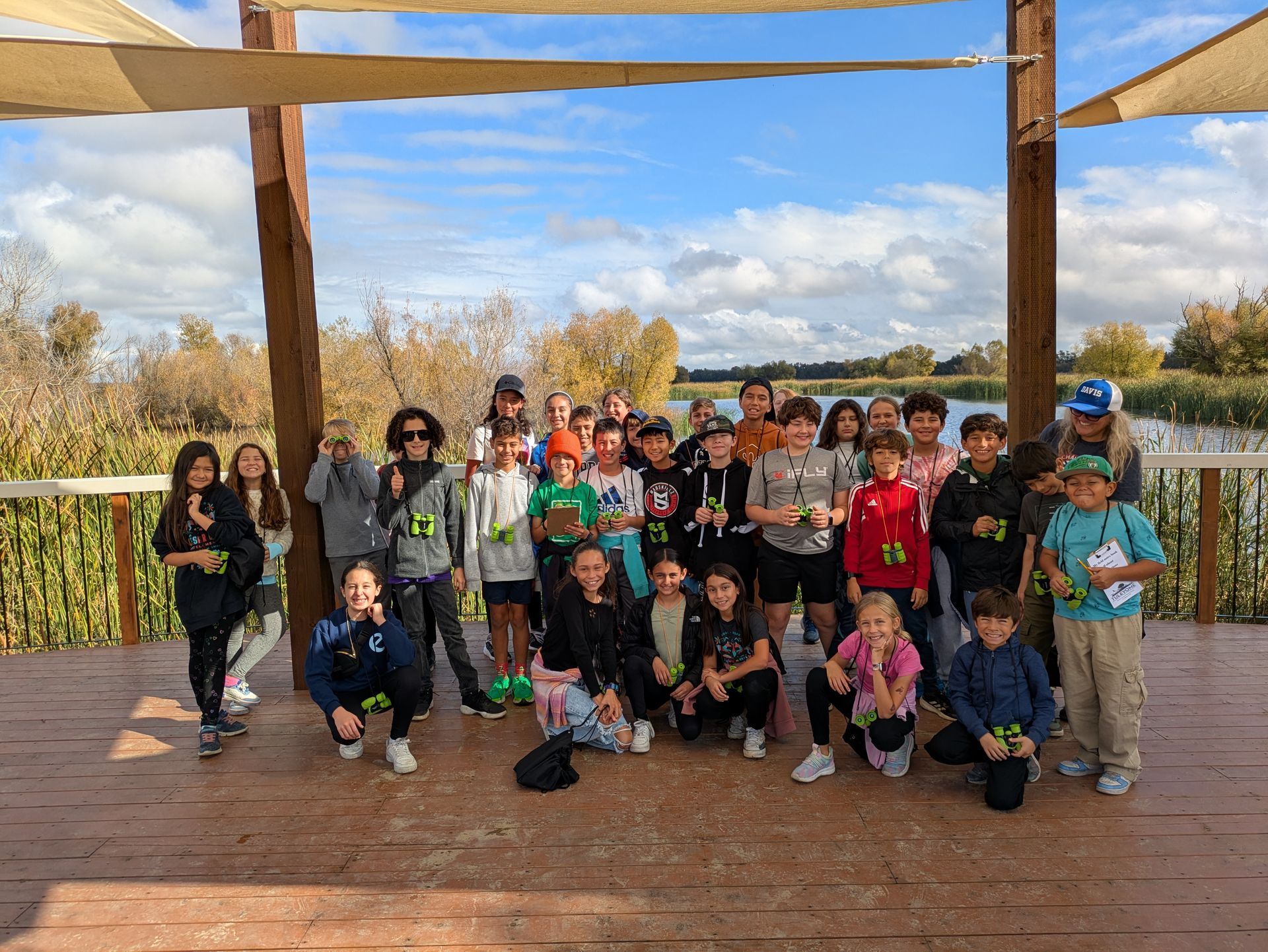

Cesar Chavez Elementary 5th graders pose for a group photo on the Rotary Pavilion


Our third trip was on November 14th, with two classes of 5th graders from Cesar Chavez Elementary in Davis. The students completed our 4th / 5th grade Adaptations Trail, which focuses on sensory adaptations and included a quiet listening activity, learning about ear modifications, and a fun game where students use their sense of hearing to track “prey”.
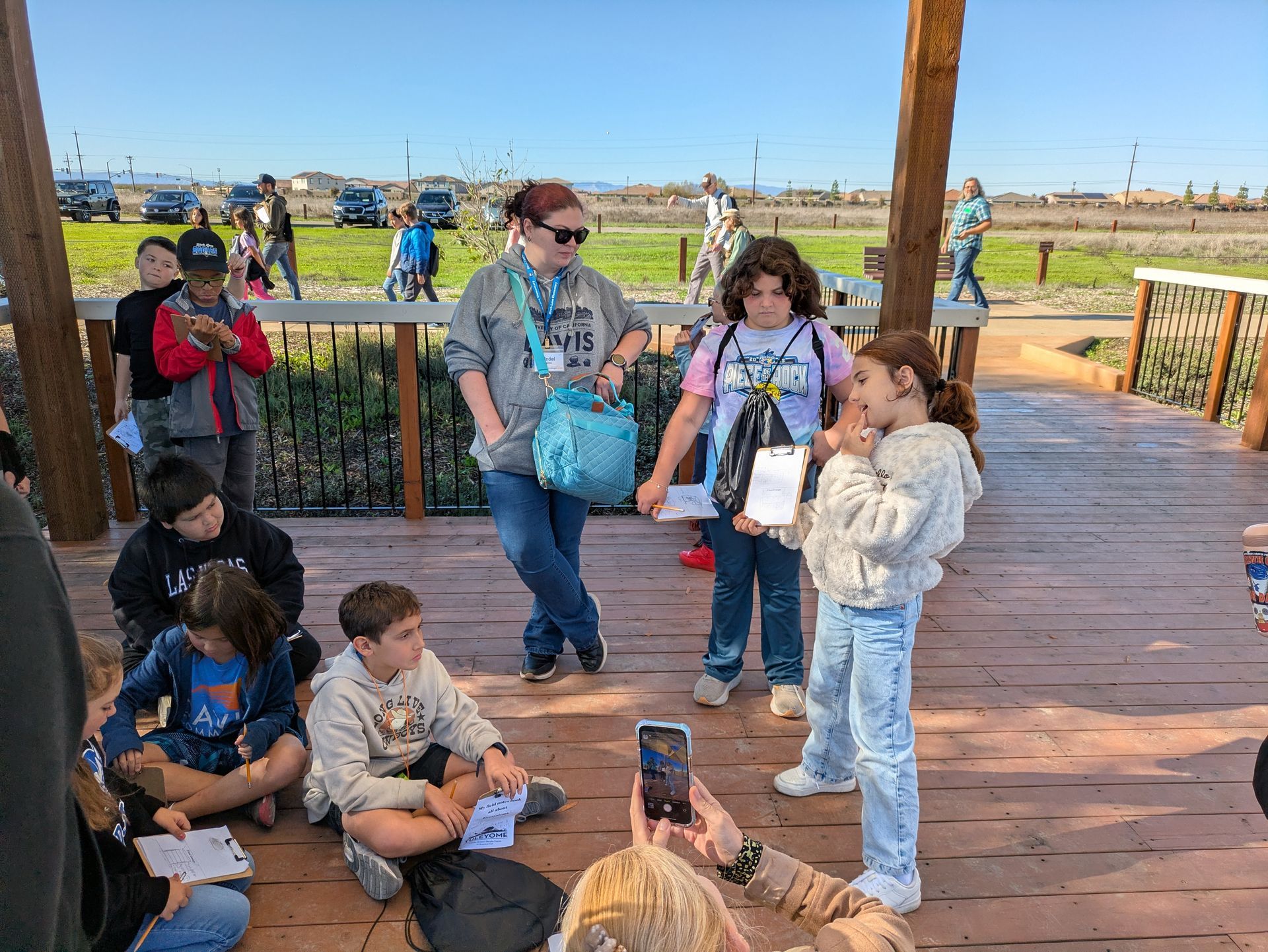
A Birch Lane 4th grader presenting her ideas for the design challenge


Our final trip of the month was on November 21st, with two classes of 4th graders from Birch Lane Elementary in Davis. The students completed the 4th/5th grade Ecosystems Trail, which focuses on how plants obtain resources from their ecosystems, including learning about water transport and tree rings, looking for decomposers in the soil, and an engineering challenge looking at ways to grow plants without soil.


If you’re a teacher or youth group leader and are interested in bringing your kids out for a field trip with Tuleyome, you can learn more about the program here. Once you’re ready to book a trip, you can submit an interest form on the website or reach out to Geoff at gbenn@tuleyome.org.

RECENT ARTICLES
By Diego Barraza December 3, 2025
In October, Tuleyome hosted a community walking tour showcasing Mare Island’s southwestern coastal wetlands, a notable potion of the six distinct parcels proposed to be included in The San Pablo Bay National Wildlife Refuge Expansion Act. By law, National Wildlife Refuges overseen by U.S. Fish and Wildlife Service (USFWS), are legally mandated to conserve migratory bird and endangered species habitat while allowing for public access and recreation compatible with those mandates. This boundary expansion legislation is expected to be introduced in the 119 th Congress by Representative John Garamendi (D-CA-08), Jared Huffman (D-CA-02) and Mike Thompson (D-CA-04) and Senator Alex Padilla (D-CA). Approximately 6,934 new acres would be included in the boundary expansion. The boundary expansion aims to enhance the existing refuge’s 24,390 acres of essential wetland habitats along the coastlines of Sonoma, Solano, and Napa Counties. These tidal marshes, mud flats, and seasonal wetlands all host migratory birds, small mammals, and form the nursery grounds to sensitive fish species. Some iconic species include the California clapper rail, salt marsh harvest mouse, San Pablo song sparrow, and Suisun shrew. Current owners of the parcels that are proposed to be included within the refuge boundaries are the State Lands Commission, the State Coastal Conservancy, and the Sonoma Land Trust, all who support the proposal.
By Kristie Ehrhardt December 3, 2025
You may have heard that there are some modifications brewing regarding the protections afforded species by the United States Endangered Species Act (ESA). Often regarded as one of the most powerful and effective (as well as sometimes controversial) environmental laws in the United States, the ESA was written into law with bipartisan support on December 28, 1973. The purpose of the ESA was to provide the infrastructure to conserve species and their habitats here in the United States and elsewhere. To date 99% of the species listed under the ESA have avoided becoming extinct. Under the law, organizations as well as individuals can petition to have a species listed as threatened or endangered under the ESA. The petitions then undergo extensive evaluation and review by scientists and the public prior to a decision being made about whether the species in question should be listed under the ESA. The ESA also requires that critical habitat areas also be protected as well as recovery plans be drafted for the species. Although this sounds very rigid, the law does allow for flexibility and requires coordination between federal, state, tribal and local agencies to conserve and protect species and their habitat. As the ESA currently stands, once a species is listed as threatened or endangered under the ESA, it and its habitat is afforded formal protection. Any impacts to the species itself or its habitat will likely require a permit and possibly remediation from the United States Fish and Wildlife Service or other leading agency. Under the required recovery plans, populations are monitored over several years to determine if efforts being made are aiding to its recovery. Once a species is considered recovered, it is removed from the special-status species list. Admittedly it is a long process but it is successful. One of the most illustrious delisting is that of the Bald Eagle ( Haliaectus leucocephalus ) in 2007 following the banning of dichlorodiphenyltrichloroethane (DDT) and a recovery period for the eagles. Another celebrated species that has been delisted from the ESA is the American Peregrine Falcon ( Falco peregrinus ) in 1999 following a captive breeding program and other intense conservation efforts. In 2016, more species were removed from the special-status species list than ever before. The other way that species can be removed from the special-status species list is if the decline has become irreversible and they are unfortunately classified as extinct. Habitat loss, overuse, competition from invasive non-native species and disease introduction are often human-caused and can be reversible if caught early enough. The goal of the ESA is to strengthen and highlight conservation efforts for species and their associated habitats. In addition to the ESA, the United States also works in cooperation with Migratory Bird Treaties with Canada, Mexico and Japan as well as the Convention on Nature Protection and Wildlife Preservation in the Western Hemisphere, the International Convention for the Northwest Atlantic Fisheries, the International Convention for the High Seas Fisheries of the North Pacific Ocean, the Convention on International Trade in Endangered Species of Wild Fauna and Flora and other international agreements. The ESA also offers assistance to states and other associated parties to develop and utilize conservation programs that meet national and international conservation standards for the best interest of the US citizens and our heritage in fish, wildlife and plants. The Berryessa Snow Mountain National Monument is home to several species protected under the ESA including the federally threatened Northern Spotted Owl ( Strix occidentallis caurina ), the federally endangered Pacific Marten ( Martes caurina ) and the Pacific Fisher ( Pekania pennanti ), the federally threatened California Coastal Chinook Salmon ( Oncorhynchus tshawytseha ) and the Northern California Steelhead ( Oncorhynchus mykiss indeas ).  -Kristie Ehrhardt ( kehrhardt@tuleyome.org ) Tuleyome Land Conservation Program Manager
By Kristie Ehrhardt December 3, 2025
Urban legend has it that our national symbol was nearly the Wild Turkey. Ben Franklin called them a “bird of courage” and it’s been said that he suggested that the Bald Eagle be replaced with a Wild Turkey. I’m not sure if that is true but I will say that after having a confrontation with the turkey brigade, they are not to be messed with. There are only two species of Wild Turkey world wide; the one we’re familiar with here in North America (Meleagris gallopavo) and the Ocellated Turkey (M. ocellata) found in Central America. For different reasons, the Wild Turkey is probably one of the most recognizable birds in the United States. Although I think they look best foraging under oak trees, some think they look even better on a platter surrounded by all the Thanksgiving accoutrements. Wild Turkeys are upland game birds and belong to the family Galliformes. The domesticated white turkey is a relative of our pretty Wild Turkey. Adult males have featherless red heads, long reddish-yellow legs with three toes facing forward and one rear-facing toe just below a nasty spur that they use to fight other males with. Their body feathers are generally dark brown and black with a stunning coppery sheen and a fan shaped tail. His iridescent feathers have areas of bronze, copper, green, gold, purple and red. Females on the other hand are about half the size of males and in following female upland game bird dress code, are mainly drab brown to camouflage while sitting on the nest. Ironically, this hefty brute that tries to intimate shoppers in the grocery store parking lot or corner toddlers in the neighborhood park was nearly extinct by the 20th century. By the early 1900’s only about 200,000 individuals were left roaming the country-sides of the United States due to habitat loss and over-hunting. Thanks to conservation efforts and responsible hunting practices, today their population is estimated at 6.5 billion wild birds in the United States. While several states have “turkey-rich refuges” here in California it seems that the birds have badgered their way into many of our urban and suburban areas. Wild Turkeys have funny appendages with funny names. The wattle is the skin flap that hangs from the beak to the neck and the snood is the piece of flesh that dangles from the beak. Can you guess what a caruncle is? Naturally, they’re the little bumps of flesh that cover the bird’s necks and heads. And of course we can’t forget about their beards - those are the bundle of stiff feathers that grow from their chests. All males have them and so do a few females but theirs is not nearly as glorious as the males’. The beard gets longer as the bird ages and biologists still don’t know what the purpose they serve. Very young turkeys are called poults and eat insects like they were gummy bears. As they age they develop a more refined and mature pallet and begin to incorporate some vegetation. Adult turkeys eat acorns, nuts, seeds, berries, insects and even small reptiles and amphibians. Young males are called jakes and adult males are called Toms while female turkeys are called hens. Wild Turkeys are highly adaptable and in California they can be found occupying a wide range of habitat types from oak woodlands, to mixed conifer forests, valley riparian, high deserts and even suburban parks and parking lots. You may find them pecking at their reflections in glass office complex doors, strutting around the post office parking lot or sitting on the hood of your car in the driveway. Fun Wild Turkey Facts! Wild Turkeys are much more agile than they appear. They have been clocked at 18 miles per hour on foot and can fly 50 to 60 miles per hour! Wild Turkeys have excellent vision and can see three times better than our perfect 20/20! They can change the color of their heads based on their mood! Although they’ve been called “courageous”, these softies sleep together in trees for safety. Males and female turkeys can be distinguished based on the size and shape of their droppings. Who knew? On average, adult Wild Turkeys have between five and six thousand feathers! When you’re walking off your Thanksgiving meal, keep an eye out for these beauties. Their habitat includes more than just your dinner table!  -Kristie Ehrhardt ( kehrhardt@tuleyome.org ) Tuleyome Land Conservation Program Manager