


estamos secos
Sobre nosotros
Tuleyome es una organización conservacionista sin fines de lucro 501(c)(3) con sede en Woodland, California. La palabra "Tuleyome" (pronunciada too-lee-OME-ee) es una palabra india del lago Miwok que significa "lugar de hogar profundo". Y ese término “lugar de origen profundo” ejemplifica nuestra profunda conexión con nuestro medio ambiente, nuestras comunidades y nuestras tierras públicas regionales.
Más información →
Montaña Nevada de Berryessa
Monumento Nacional
Disfrute de 344,476 acres de tierras públicas administradas por el gobierno federal en las montañas Northern Inner Coast Range.
Próximos Eventos
Noticias y perspectivas
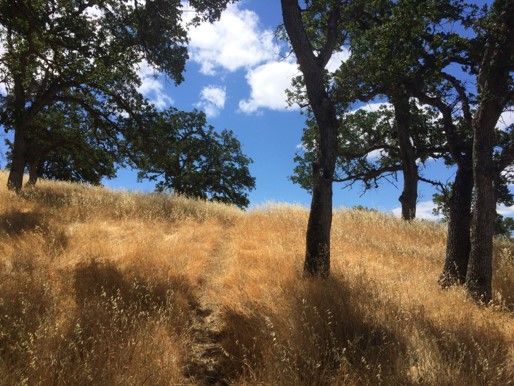
Blue oaks on the Berryessa Peak Trail. Photo by Geoff Benn. Our September Nature and You speaker was Tuleyome Education Associate Geoff Benn, who gave a lecture on one of his favorite subjects, California’s amazing oaks. In the lecture, Geoff discussed how California’s oaks evolved and how they deal with a range of challenges, including drought, fire, and diseases. If you missed it, be sure to check out his talk here.
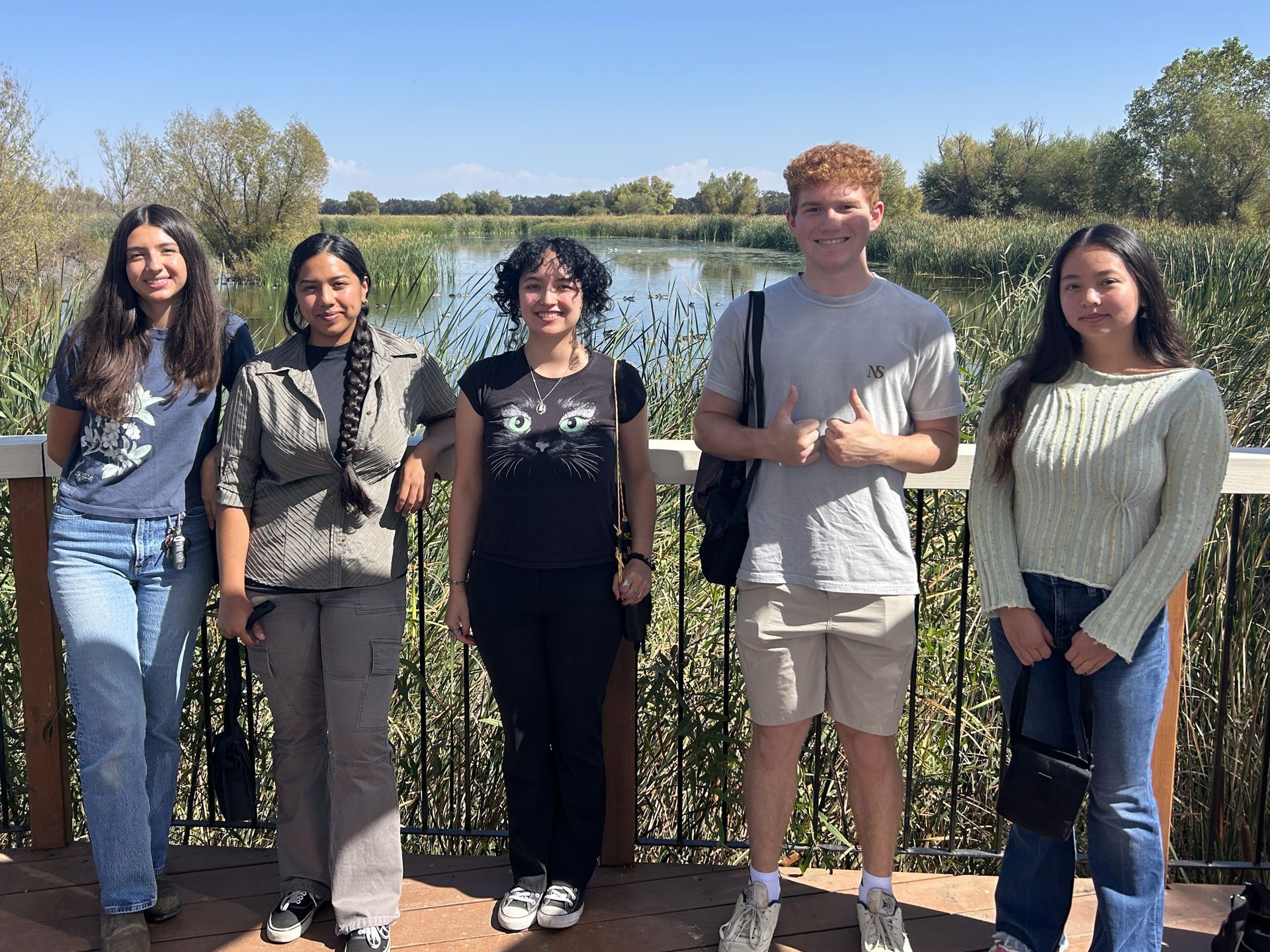
Interns Deana Martinez, Yaquelin Gonzalez, Gabriella Limon, Ben Hubbard, and Keira Lazaro at Woodland Regional Park Preserve. Tuleyome is excited to welcome our largest ever cohort of interns, including four Horticultural Interns and one Communications Intern! Our Horticultural Interns are paired with volunteer mentors at Woodland Regional Park Preserve where they learn about managing invasive plants and monitoring populations of rare native plants. This year’s mentors are Jennifer Hogan and Teri Barry, both longtime volunteers and leadership team members at the Preserve. Our Communications Intern works closely with Program Director Nate Lillge to shape and execute our communications, including social media, e-newsletters, and more. Keep reading to meet each of our interns: Horticultural Intern Yaquelin Gonzalez has lived within the bounds of Sacramento County her whole life, where her mother’s garden and love for rock collecting sparked her appreciation for nature. Her desire to enter the environmental field was further fueled via nature-based field trips during elementary school. After high school, she began studying at American River College and eventually transferred to the University of California, Davis in 2025 to study Environmental Science and Management, focusing on Ecology, Biodiversity, and Conservation. Here, she has gained an interest in soil science as well as plant ecology and hopes to pursue a research career in restoration ecology. In her spare time, she likes to go on nature walks, play the guitar, read, bake, and listen to podcasts. Horticultural Intern Ben Hubbard grew up in Roseville, California where he spent a lot of time outdoors with friends, competing in sports, hiking, as well as instructing elementary school field trips about the environment, specifically wetlands. He just recently transferred from Sierra College to the University of California, Davis and is working towards completing his Bachelor’s degree in Environmental Science and Management with a specialization in Ecology. When he completes his education, he hopes he can make a difference in the world and help to preserve wildlife and natural land for the next generation to enjoy as much as he has. When he’s taking a break from studying you can find him practicing with his recreational sports team, grabbing a coffee, hiking, enjoying a good story, or just hanging out with friends. Horticultural Intern Keira Lazaro is a third year undergraduate at University of California, Davis where she majors in Environmental Toxicology. She’s specializing in pharmacology and biotechnology with hopes to work in a research lab on specific pathogens that attack native California crops. She is also a part of the University Honors Program in Davis and is taking the first couple of steps towards her fourth year signature work on the oxidation chemistry behind electronic cigarette devices, specifically with exposure in indoor environments. Keira grew up in Los Angeles County and hopes to find a career in Southern California once she graduates. When she is able to go back home she spends most of her free time at the beach or hiking. Communications Intern Gabriella Limon grew up in Bishop, California, within the Sierra Nevada and Owens Valley where she became connected with wildlife and stewardship. She spent her later teenage years in Southern California and committed to the University of California, Davis, where she is currently pursuing a Bachelor's Degree in Environmental Policy Analysis and Planning with a focus on conservation management. In addition, she is also a scholar staff member of the UC Davis Women’s Resources and Research Center where she provides STEM-based programming and academic support to students of marginalized identities. Gabby is especially passionate about wildlife justice, land protection, and environmental education. She spends her free time writing, playing video games, tide pooling, hiking, and logging critters. Horticultural Intern Deana Martinez grew up in Arbuckle, California, surrounded by rice fields and almond orchards, which grew her interests in agriculture. She is currently in her 4th year at the University of California, Davis, where she is pursuing a Bachelor’s Degree in Entomology with a Soil Science minor. Along with classes, she is involved in a Nematology research lab, working with plant parasitic nematodes and their interactions with common crop systems in California. She has also held a student position with the Plant Biology research greenhouses as a technician for the past 3 years. Outside of school and work, Deana enjoys hiking, reading, and spending time with her family.
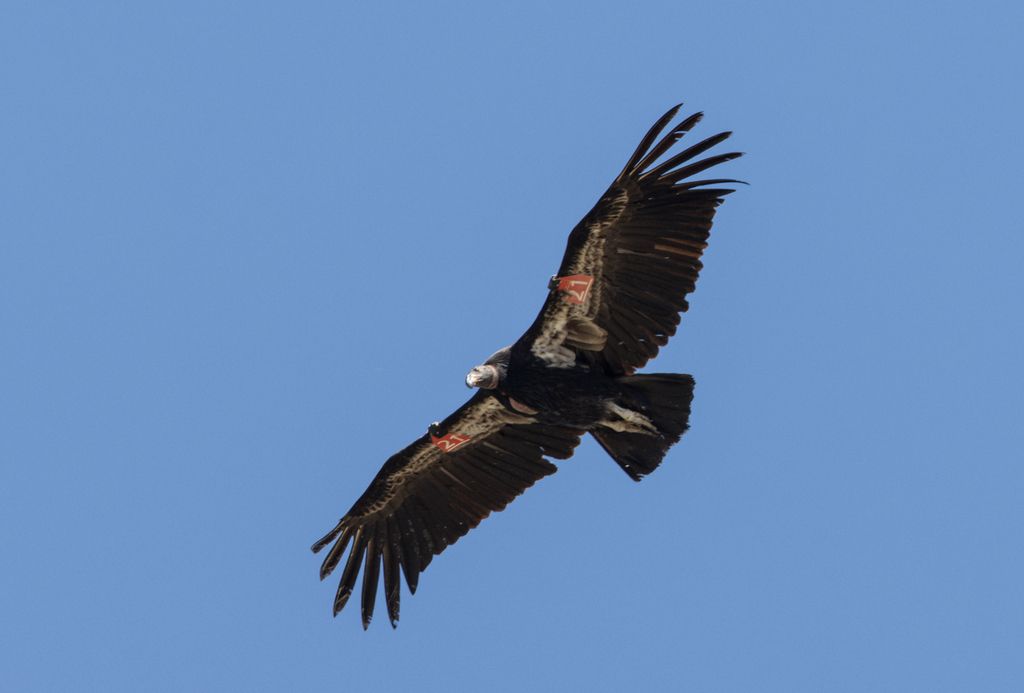
California’s condors and sea otters are two of conservation’s great comeback stories – species that were once on the brink of extinction and have rebounded thanks in large part to the Endangered Species Act (ESA). That 50-year-old law is now facing one of the most significant rollbacks in its history, and California is fighting back in court. Last week, Attorney General Rob Bonta, joined by a coalition of 21 state attorneys general, filed two lawsuits challenging the Trump administration’s recent changes to the ESA. At the center of the fight is a single but enormously consequential change: the administration rescinded the longstanding definition of “harm” under the Act – a definition that, since the early 1980s, has made it illegal to destroy or damage the places endangered species live, breed, and feed. Without it, habitat destruction itself may no longer count as illegal “harm” to a species, even though most biologists agree habitat loss is the single biggest threat facing endangered species today. The changes don’t stop there. The administration is also making it easier for federal agencies to avoid designating “critical habitat” for at-risk species, and it has eliminated automatic protections for newly-listed threatened species – meaning wildlife officials must now write custom protection rules for each species one at a time. That’s a heavy lift for an agency that has reportedly lost more than a third of its staff, and which currently has 400 species waiting for a protection decision. Why this matters here at home California is home to more threatened and endangered species than any other state. It’s natural to assume the state’s own Endangered Species Act would fill any gap left by federal rollbacks – but legal experts point out that California’s law, as written, doesn’t clearly protect habitat at all. It primarily prohibits killing or injuring individual members of a listed species, not damaging the places they live. That means the very thing under threat federally – habitat protection – may not have a reliable backstop at the state level either. What this means for our work At Tuleyome, so much of what we do, protecting oak woodlands, wildlife corridors, and watershed habitat across our region – depends on the basic principle that a species' home matters as much as the species itself. A condor or a Clear Lake hitch can’t survive court-ordered protection from hunting alone if the habitat it depends on is quietly bulldozed, drilled, or logged out from under it. This lawsuit is about defending that basic principle at the federal level, and it’s a reminder of why local land protection and legislative advocacy matters now more than ever – because the safety net above us may have real holes in it.