


Science Corner - Sharp-tail Snake!
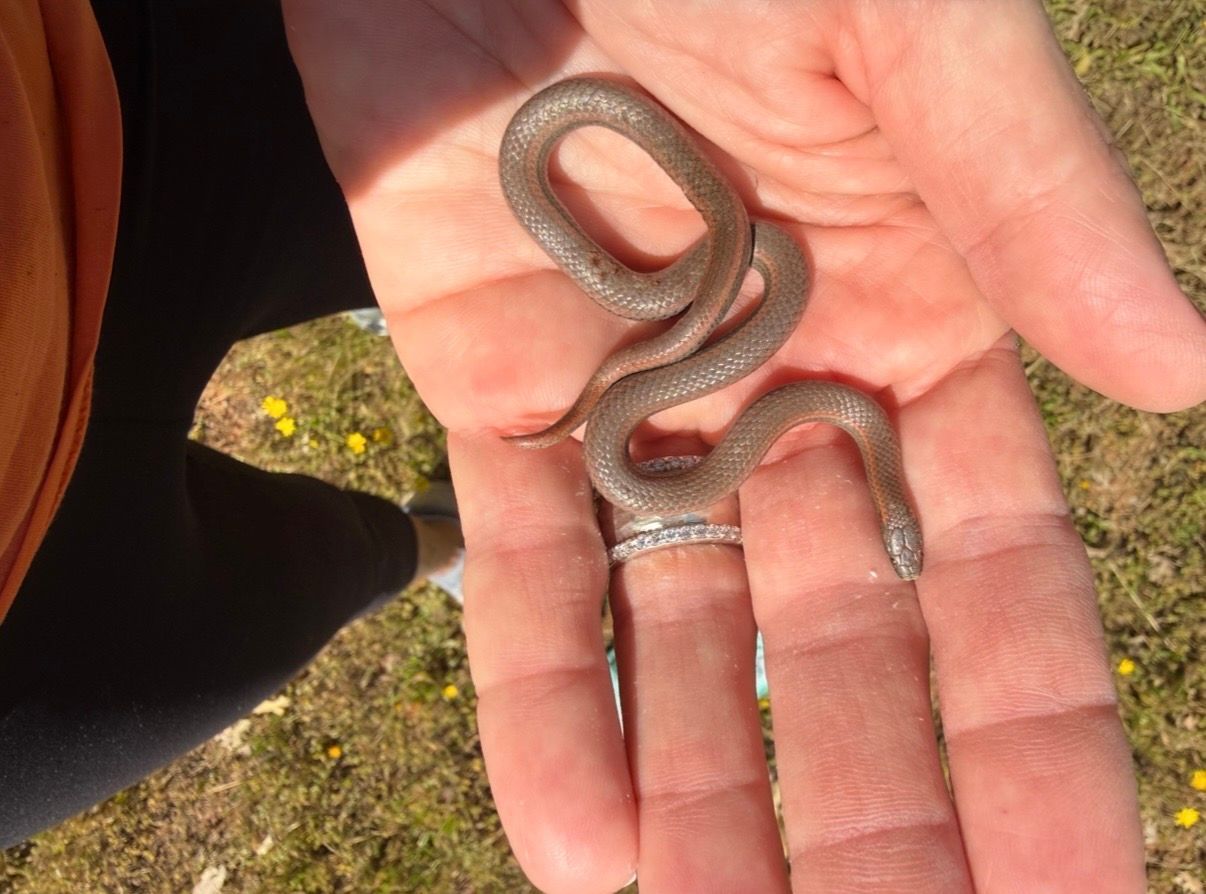
Have you ever turned over a piece of wood or picked up a flower pot to find the tiniest little pink snake flipping and twisting in protest to the unexpected blaze of blinding sunlight? At first glance it may look like an earthworm but with a couple more rolls and twitches, you will probably see that its belly has horizontal dark and light stripes. Chances are that little guy was a sharp-tail snake!
Known for being docile and even gentle, these little friends prefer to stay hidden beneath undisturbed rocks and debris and are rarely ever seen strutting about exposed on the surface like other commonly observed snake species. These little guys are aptly named for the sharp spine that extends from the tip of their tails. The spine does not contain venom and isn’t sturdy enough to poke our skin but it is really helpful for stabilizing slippery slugs - ambrosia for a hungry sharp-tail snake!
Their dorsal sides usually range from brick red (think of the color or iron-rich soil), to a lighter gray-ish, brown-ish, bubble-gum-ish pink with two, vibrant to faint red vertical stripes. Some individuals are even orangey but they all have horizontal black and creamy white striped belly scales that it will eagerly display during its dramatic “I’ve-been-mortally-wounded-please-leave-me-alone” fake-out defensive display. Once the threat has been neutralized, the snake will stop trying to turn itself inside out and with much less fanfare, will quietly go back to hiding under the rock or log from which it came.
Sharp-tail snakes (Contia tenuis) belong to Colubridae, the largest and most diverse family of snakes with over 300 genera. Sharp-tail snakes are also known as Pacific brown snakes, Pacific ground snakes and Oregon worm snakes and are endemic to California, Oregon and Washington as well as British Columbia. Although they can be found in a variety of habitats, they prefer moist soils beneath debris in woodlands, forests and grasslands. Males and females look similar and breeding occurs from June to July. Three to eight eggs are laid about six inches under soil, grass, roots or in rocky areas and will hatch around mid-October. At about 12 inches maximum in length, you might not even notice them but if you do, give them a wink and a nod for helping rid your garden of slugs.
RECENT ARTICLES