


Science Corner - The Giant Garter Snake!
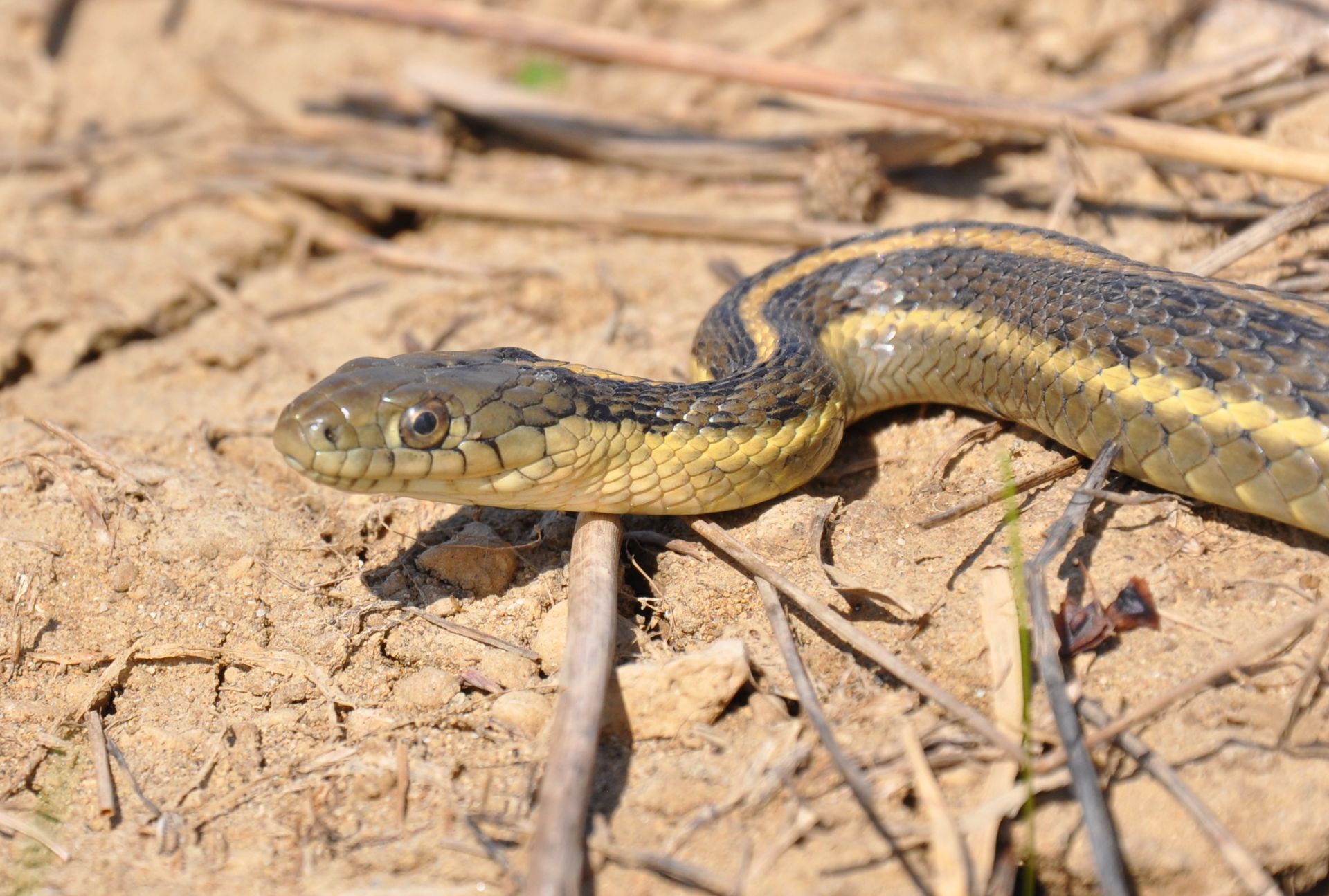
Did you know that the great state of California now has an official state snake? In October, Governor Newsom signed a bill that established the Giant Garter Snake as our sanctioned state snake!
The Giant Garter Snake (Thamnophis gigas) is the largest member of the garter snake family measuring at up to nearly 64 inches long. It is semi-aquatic which means that it spends part of its life in water and part on land. The Giant Garter Snake, or GGS as it is affectionately known to admirers of the snake, historically occurred along the edges of freshwater marshes, flood basins and smaller waterways throughout California’s Central Valley from Butte County south to Kern County. Today however, their range is believed to terminate around Fresno County due to habitat loss and fragmentation. Good news though, the GGS has adjusted and adapted and can now be found living in harmony with a variety of agricultural practices including irrigation canals, rice paddies and natural and managed wetlands such as sloughs, ponds and lakes and slow moving streams. They are endemic to California’s Central Valley which means they are found only here and nowhere else in the world.
Fun Fact(s) - other California Central Valley endemic species include the Yellow-billed Magpie (all other California magpies have black bills!), Tricolored Blackbird, San Joaquin Kit Fox, Blunt-nosed Leopard Lizard, several species of kangaroo rats and our friends that call the Berryessa Snow Mountain National Monument home - Tule Elk!
Being semi-aquatic, GGS forage and rest in still to slow moving water bordered by taller vegetation that it uses for cover. GGS are ectotherms or cold-blooded organisms which means that they rely on external sources to heat their bodies. This makes the upland habitat adjacent to their wetland habitat a necessity for them to bask and find shelter. GGS use underground burrows constructed by small mammals such as ground squirrels and other rodents in the upland habitat for shelter during the cold winter months. When temperatures drop, GGS undergo a reptile-specific type of hibernation called “brumation”. During brumation, their metabolism slows but they may still occasionally move about which differs from true mammalian hibernation. On especially warm, sunny days GGS may emerge to bask and even drink.
GGS look like a typical garter snake species with a prominent lateral stripe that is cream to yellow to orange down the center of its back with two lighter lateral stripes down its sides against an olivey-brown background. Many other common garter snakes have red stripes while GGS display no red at all. You may or may not see black spots between the lateral stripes and their undersides are cream, orange, olive brown or even pale blue. Their large, round eyes are shiny golden yellow with black irises. They emerge from brumation in early spring and remain active until late fall but it all depends on ambient and water temperatures. Once the water reaches 68 degrees Fahrenheit or higher the snakes become more active. Breeding occurs from March to about May with female snakes generally being larger than male snakes as is common with garter snake species. Like all members of the Thamnophis genus, GGS carry eggs internally but give birth to live young with an average of around 15-17 snakes per litter. Larger females typically have a greater number of young but interestingly, smaller females tend to have larger individual snakes. The babies often fall prey to other snakes such as California Kingsnakes and Gopher Snakes as well as mature bullfrogs while the adults are taken by raptors. GGS primarily forage in the water with small fish, frogs and tadpoles being their favorite snacks. GGS are quite docile and often prefer to leave a lasting stink on you by emitting musk through their cloaca rather than bite - although all garter snake species are capable of “musking”, many other species are overly feisty and seem to enjoy biting AND musking (sort of like a “buy one, get one free promotion”). But I get it, they’re small and scared and trying their best to intimidate you even if you’re just relocating them to a safer place.
Currently, only about five percent of California’s historical wetlands remain in the Central Valley. Because the snakes are dependent on water, habitat fragmentation and land use changes have caused the GGS to become a vulnerable species. Flooding can displace them or drown brumating snakes while drought causes water sources to be unreliable or even completely disappear when needed. The historic GGS population has declined by 90% and was listed as threatened under the Federal Endangered Species Act in 1971 and the California Endangered Species Act in 1993. Being designated as the California State Snake acknowledges the importance of the species and their role in the Central Valley’s spectacular ecosystem.
-Kristie Ehrhardt (kehrhardt@tuleyome.org)
Tuleyome Land Conservation Program Manager
RECENT ARTICLES