


Science Corner - Tule fog, what is it?
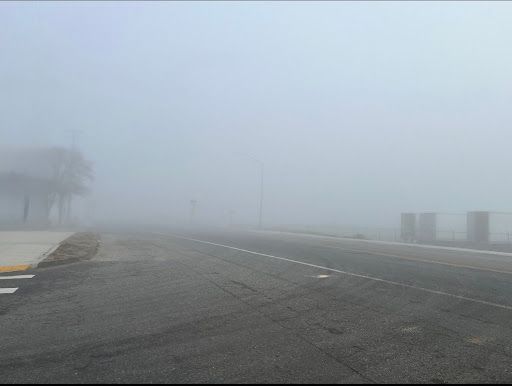
Well, I can tell you what it isn’t. I recently watched the movie “The Mist”. It came from Stephen King’s brain which, not surprisingly, makes it a horror film. In the movie, a dense fog overtakes a small town in Maine following a violent thunderstorm. Inside the fog are icky, man-eating creatures. Several people end up trapped inside a supermarket as the fog surrounds the parking lot outside the glass doors. The film ends up being more about how people relate to each other and to their conditions while under duress, rather than what to do about the things inside the fog that’s keeping them held captive in a store filled with food, water and other essential items (doesn’t really seem so bad). The ending was very unsatisfying so if you’ve never seen it, maybe don’t bother. Anywho, back to our Tule Fog that doesn’t contain man-eating creatures but can still be a source of hazardous driving conditions and emotional strain if you like sunshine like I do.
Did you know that there are several types of fog? They include: radiation, precipitation, advection, steam, upslope, valley, freezing and snow fog. Based on that list, you might have guessed that our Tule Fog is also sometimes called Valley fog. Tule Fog is a dense form of radiation fog that is caused when waterlogged air and the rapid cooling of ground surfaces intermingle; moisture condenses and clings to tiny particles like dust and pollutants and creates a dense, seemingly relentless layer of fog. Because the Central Valley is surrounded by two different mountain ranges, the Sierra Nevada on the east and the Coastal Range to the west, the fog blanket becomes trapped in the valley. The perfect storm for Tule Fog includes damp ground, cold temperatures, clear skies and little to no wind - pretty characteristic of our Mediterranean climate. This recipe allows the fog to dawdle, smothering the valley for days on end sometimes stretching into two or three wet and gray weeks. Can you tell I don’t like it very much?
You know how California has many endemic species, meaning those things only occur here in California? Tule Fog is one of those things! In fact, it’s unique only to California’s Central Valley - that big, foot-print down the center of California, that extends about 400 miles from Redding to south of Bakersfield. Tule Fog is named for tules, also called bullrush (Schoenoplectus sp.), the native aquatic vegetation that co-dominated the long since gone marshes of California’s Sacramento and San Joaquin Valleys. Radiation fog occurs throughout the world but Tule Fog is considered a remarkable weather phenomenon with unique circumstances including intensity, distribution and geographic setting.
Tule Fog can create near-zero visibility conditions by appearing rapidly and causing a sudden wall of white, reducing visibility to just a few feet, sometimes less than even ten. I once drove from Bakersfield to Sacramento on Christmas Eve enveloped by tule fog the entire 300 mile drive. It made a normally four hour drive into a stressful, soggy and cold eight hour drive following absolutely nothing but the white line on the shoulder of the road and white knuckles on the steering wheel. Recently there was a 43 vehicle pileup on Highway 58 near Bakersfield due to the Tule Fog and in January of this year there was a 150 vehicle chain-reaction pileup near Earlimart on Highway 99. The National Weather Service has published safety tips for driving in the fog :
- Slow down and allow extra time
- Only use your low-beam headlights, high-beams causes glare and makes it more difficult to see
- Use your fog lights if you have them
- Leave extra space between you and other vehicles to allow for sudden changes
- Follow the lines on the road if visibility is reduced to ensure you stay in your lane
- In extremely dense fog pull off into a parking lot and turn on your hazard lights. If there is no parking lot, pull as far off the road as possible, set your parking brake, turn on your hazard lights and turn off your headlights and take your foot off the brake so other cars do not mistake your position for the road and run into you.
As much as I don’t like Tule Fog, there are benefits to it. It is an important part of our agricultural industry and seasonal climate. The presence of Tule Fog ensures that deciduous fruit and nut trees go through proper dormancy by providing the correct duration of cold temperatures at night (also called “chill hours”). Tule Fog also prevents frost damage by keeping the tree and ambient air temperature similar. Fog during daylight hours can shield a newly budding tree from the sun causing it to overheat and break dormancy. Fog also provides moisture keeping the ground moist, aids in orchard maintenance and regulates the climate by trapping heat at night and blocking the sun’s radiation during the day.
All in all, thanks to California’s stringent air quality regulations and a reduction in pollution, episodes of Tule Fog haven’t been as intense or as frequent as in past decades. This is a good thing for people that prefer sunshine but less so for farmers.
RECENT ARTICLES