
Monumental Questions - Monumental Vegetable?
Kristie Ehrhardt • March 5, 2026

Yes, indeed! Although I do not advocate for eating things you find in nature, there is one plant in particular that is both lovely to look at and to nosh on.


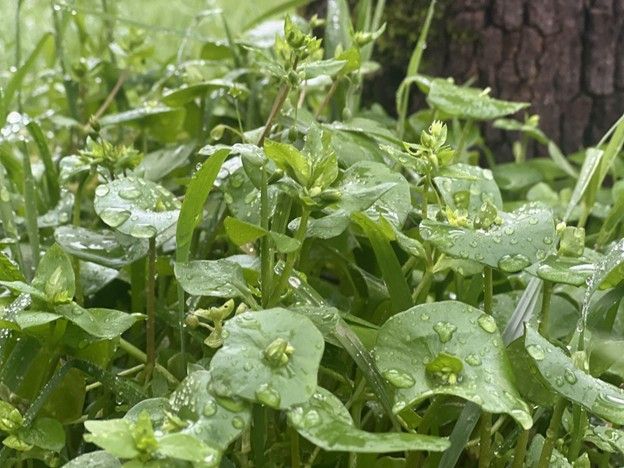
As you may have heard, we here at Tuleyome are beginning to schedule wildflower tours of our very own “deep home place”, the Berryessa Snow Mountain National Monument (Monument). One of the plants that is a reliable observation, easily identifiable and flowering right now as we speak is miner’s lettuce!


I must first say please do not harvest miner’s lettuce from the Monument as it is not only delightful for us to look at, it is an important food source for caterpillars and butterflies.


Miner’s lettuce (Claytonia perfoliata) belongs to the Purslane family - Montiaceae. Claytonia is one of 17 genera and 230 known species that range from small, herbaceous plants to woody shrubs. Many of the genera of Montiaceae are edible and that does include miner’s lettuce.


Miner’s lettuce is native to western North America from Mexico to as far north as British Columbia. Apparently European explorers liked it so much that they carried it back to Europe with them in the 18th century and cultivated it at the Kew Botanical Gardens in London, It has since naturalized throughout the natural landscape.


Utilized by Native Americans for generations, miner’s lettuce is a valuable source of vitamins and minerals. During the gold rush, settlers ate it to prevent scurvy, hence the clever common name. According to a study published in the Journal of the American Dietetic Association, a mere 100 grams of miner’s lettuce, about the size of a dinner plate, contains about 35% of your recommended daily amount of vitamin C, 22% of vitamin A and about ten percent of the iron required daily. It also contains protein and the entire plant, with the exception of the roots, is edible, even the itty bitty flowers. Young stems are tender and sweet while the succulent leaves have a bright, fresh taste and seem to melt in your mouth. Strangely enough, we found out last weekend that domestic goats do not care for it; apparently chewing on the rope holding the fence panels together was more tantalizing. It’s also been noted that deer tend to ignore it as well. Entire pages have been dedicated to the plant lauding it for its yumminess in salads, sandwiches and even sushi. Although it is delicious raw, personal experience speaking here, with a very light salad dressing or even just a splash of lemon juice; it can also be cooked as used as you would spinach. However, like spinach, the plant can contain toxic amounts of sodium oxalate which may potentially promote kidney stones among other terrible things.


Miner’s lettuce is common in the spring and can usually be found in a moist, shady environment. After a good rain it may pop up in sunny areas but the best stands are usually in well-shaded, cool areas. As the temperatures rise, the plants in the sunny areas begin to dry up and turn blush pink to a deep red. Plants in dryer locations have a bitter taste. It is easy to identify with its basal rosette, many long petioles and leaves that wrap completely around the stem looking like saucers or little lily pads. In young plants these leaves will be bright green and heart-shaped but as the plants mature, they become more rounded or cup-shaped. Mature plants may also have tiny, dainty white to light pink flowers dangling from the center of the saucer-shaped leaf. The plant usually flowers from February to May or even June if conditions are right.


While I most definitely do not promote harvesting plants in native or natural ecosystems, miner’s lettuce can easily be cultivated in your own backyard! The best flavor comes from a cool, shady, damp location so plan for an early crop. But, it can also tolerate full sun if the soil remains good and moist. Miner’s lettuce also seems to favor occasional minor ground disturbance and growing it as a seasonal ground cover can be pleasing to the eye and the tummy! Miner’s lettuce can be planted in late summer to early fall in mild climates and harvested all winter. It can also be sown in the spring and with apple water be harvested until the summer heat arrives. The plants can be cut and allowed to regrow several times a season as long as they are eventually allowed to finally flower and set seed as they are an annual species and reproduce by seed. Miner’s lettuce can be used in any recipe that calls for fresh, steamed or cooked greens. Eat your vegetables!


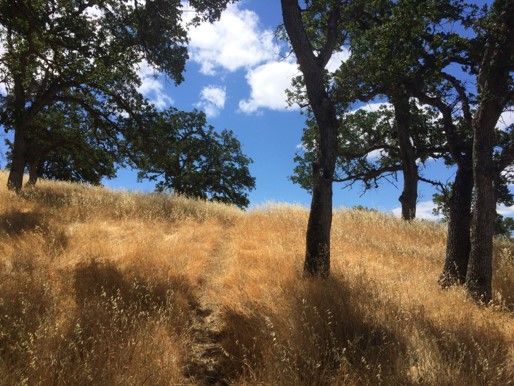
Next time you’re hiking in our favorite Monument (you know which one!) keep an eye out for miner’s lettuce and give it a nod. You might find it in several of the habitat types there including chaparral, oak woodlands, riparian and maybe even a parking lot! 

RECENT ARTICLES
March 5, 2026
Tuleyome is pleased to announce that Nate Lillge has been promoted to Program Director where he will oversee Tuleyome’s land conservation and stewardship program and our adventures, outreach and education program.  Nate joined Tuleyome ten years ago. A talented manager with a passion for the outdoors and sharing it with others, Nate has been key to Tuleyome’s successes, from the design, building and maintenance of some of our region’s iconic trails to the expansion of Berryessa Snow Mountain National Monument with the addition of Molok Luyuk. Nate is a true partner to all, dedicated to this place and its communities, an authority on the region, and a true champion of the land. Nate has spent his career dedicated to the experience and stewardship of place. Fun, knowledgeable, dedicated and brilliant, Tuleyome welcomes our new Program Director, Nate Lillge.
By Bryan Pride March 5, 2026
Just months after we rejected the notion of selling off our public lands, some in Congress are at it again. This time, the attack is more calculated; bypassing the communities, tribal nations, and local stakeholders who spent years shaping how our public lands are managed. Whether you hunt, fish, farm, hike, or simply love the outdoors, Congress is now overriding your voice and threatening the legal foundation that protects your access to these lands. What is the Congressional Review Act? The Congressional Review Act (CRA) was passed in 1996. It required that all federal agency “rules” be submitted to Congress and gave Congress 60 days to pass legislation to disapprove the rule. If Congress takes no action, the rule goes into effect. For nearly 30 years, the CRA was used sparingly, only used to review federal regulations. But Congress has now started using the CRA in a new and unprecedented way: to overturn Bureau of Land Management Resource Management Plans (RMPs) and National Monument Management Plans ; the blueprints that guide how our public lands are managed and protected. Resource Management Plans (RMPs) and National Monument Management Plans aren’t just paperwork. They are the result of years of public engagement that include tribal consultation, community input and scientific analysis that determine how millions of acres of public land are used and protected. These plans govern everything from recreation use and grazing permits to oil and gas leases, conservation designations, and wildfire management. Why this is everyone’s problem For decades, neither BLM nor Congress considered these plans to be “rules” subject to congressional review. They were understood as long-term planning documents: overarching guidance for how agencies managed land, embracing principles appropriate to the particular lands and their characteristics. Land management plans have never, in the 50 years we’ve been preparing and following them, been considered rules. That is, not until this Congress. Since October 2025, Congress has rescinded five BLM management plans covering tens of millions of acres in Alaska, Montana, and North Dakota and overturned a decision that protected the Arctic National Wildlife Refuge from oil and gas leasing. By treating these plans as “rules” subject to the CRA, Congress has called into question the legal validity of every management plan finalized since 1996. At threat are 123 BLM plans and 176 active Forest Service plans covering over 166 million acres, 14 of them are in California, including those governing Berryessa Snow Mountain National Monument and other lands in the region An Attack on One Monument is an Attack on All The CRA threat has now reached our National Monuments. As of February 26, 2026, Senator Mike Lee formally began the process of fast-tracking the destruction of the Grand Staircase-Escalante National Monument Management Plan in Utah, the first time the CRA has ever been applied to a National Monument. The Grand Staircase-Escalante National Monument Management Plan took years to develop. BLM engaged in extensive government-to-government consultation with tribal nations who have lived in and around the monument since time immemorial; nations whose ancestral cultural sites are woven throughout the monument’s 1.9 million acres. Local governments, ranchers, outfitters, scientists, conservationists, and community members all had a seat at the table. The result is a plan that balances wildlife protection, outdoor access, dark night skies, grazing, and cultural preservation, reflecting the full breadth of what makes Grand Staircase-Escalante, known as the “Science Monument”, so remarkable. What makes the decision particularly alarming is the irreversibility. Once Congress rescinds a management plan under the CRA, BLM is barred from issuing another plan that is “substantially the same.” without another act of Congress. Years of tribal consultation, community collaboration, and scientific analysis cannot simply be redone, and the protections that came from that work cannot be easily restored. The monument’s geology, fossils, wildlife habitat, grazing access, and cultural resources would all be left in a management vacuum, vulnerable to illegal vehicle use, landscape-level clearcutting of native pinyon-juniper forests, and unchecked extractive activities. This is the pattern. What happens in Utah, Alaska, Montana, and North Dakota today sets the precedent for what can happen at Berryessa Snow Mountain National Monument and every other monument. Once Congress establishes that Monument Management Plans are fair game to be overridden through congressional review, no monument, no matter how beloved, no matter how many years of work went into its protection is truly safe. An attack on one monument is an attack on all of them. What Tuleyome is doing about it We’re working with a nationwide coalition to prevent further misuse of the CRA. We are supporting legislation clarifying that land management plans are not subject to the CRA. We are ensuring that our elected officials know how much the public supports public lands and wants them protected. We are committed to fighting back, working alongside community members, tribal nations, and coalition partners to keep our public lands in public hands. We will continue to monitor developments and keep you informed. What you can do about it. Contact your representatives and let them know that public lands belong to all of us, and decisions about how they are managed should stay rooted in our communities, not decided in Washington D.C. Ask them to vote against resolutions that use the CRA to roll back our resource management or monument management plans. Monitor Tuleyome’s social media to stay up to date on fast moving issues and see how you can help. Connect with efforts to protect the Grand Staircase-Escalante National Monument Management Plan. Stay tuned. We’ll let you know what’s happening and how you can make a difference.
By Kristie Ehrhardt March 5, 2026
Historically, full moons were used to track seasons and were used as a way of keeping time. They were given significant names based on conditions found in nature during that time. Most of us are probably familiar with some of the names given to specific full moons such as “harvest” moon or “blue” moon but there are lots of others on the calendar - one a month it turns out! According to the final (sadly its the end of an era) Old Farmer’s Almanac for 2026, the full moons were named for Native American traditions or Colonial American sources and passed down from generation to generation. Some of the names are a reflection of nature while some of them are thought to have European origins and were carried to North America by European settlers. Many of the Native American moon names were given to the entire month showing a significant connection to the season of the year and the natural state of the landscape occurring then. Full moons happen about every 29 and a half days but exact timing varies by location and time zone. Most years have twelve full moons but about every 33 months, there are thirteen full moons in a calendar year. This is because our modern calendar year (365.25 days) is longer than 12 lunar cycles (354 days) and over time, that extra quarter of a day adds up and results in an extra full moon. This moon is commonly referred to as a Blue Moon. In case that math isn’t confusing enough, a Blue Moon is also the name given to a second full moon to occur in a single month. Now I’m curious if there’s ever a Blue, Blue Moon? The first full moon of the year, the Wolf Moon, occurred as early in the year as it possibly could on January 1, 2026. This was also the first supermoon (a full moon that appears bigger and brighter than normal because it is closer to the Earth) of the year. It is believed that it became to be known as the Wolf Moon because wolves were often heard howling during this time. It was originally thought that was because they were hungry during the winter but we now know it’s for social, territorial and hunting ambitions and aspirations. February’s full moon is called the Snow Moon for seemingly obvious reasons. It occurred on February 1, 2026 this year. Usually the shortest month of the year, February is also the month with the heaviest amount of snowfall and on average is the United States snowiest month of the entire year. I’m going to take a not-so-wild guess and say that year is no exception. March’s full moon is called the Worm Moon and occurs on March 3, 2026. This full moon is named for the returning earthworms and beetle larvae after winter and symbolizes the return of spring, renewal and rebirth. Bonus material - the Worm Moon coincides with a total lunar eclipse this year! Earth’s shadow will gradually glide across the full moon giving it a warm coppery glow. It is completely safe to enjoy this outdoor spectacle without any protective eyewear. April’s full moon, the first full moon of spring, occurs on April 1, 2026 and is called the Pink Moon. It was named for a native pink North American wildflower called creeping phlox. Creeping phlox is generally in full bloom during the full moon. No joke! Get it? April fools. Anywho, enjoy the Pink Moon. May actually has two full moons in 2026. The first full moon is called the Flower Moon and can be viewed on May 1 while the second full moon that occurs during a single month is routinely called a Blue Moon. May’s Blue Moon occurs May 31, 2026 and the moon will be at its farthest point from Earth making it look smaller (called a micromoon). The Flower Moon is not surprisingly named for the abundance of wildflowers blooming in May. It seems fitting to have a full moon that occurs on May Day be called a Flower Moon! The Strawberry Moon occurs in late June and can be viewed on June 29, 2026. Named for the ushering in of summer and customarily associated with the ripening of berries and the beginning of strawberry season. Yum! The Buck Moon occurs near the end of July and can be seen on July 29, 2026. It is named the Buck Moon because the month of July is when male deer, called bucks, are regrowing their antlers. Each year bucks shed their antlers and regrow bigger and more impressive set of them the next summer. August’s full moon is called the Sturgeon Moon and will be seen on August 28, 2026. It is named for the huge fish called sturgeon that are native to the Great Lakes and Lake Champlain. Although once abundant and fairly common, they are relatively rare today. The sturgeon were an integral part of that region's Native American diet.