


Science Corner -Swainson’s Hawk, an impressive long-distance migrant!
Finally, they’re back!! I’ve been waiting and watching for them and just this week I heard the first one of the summer. Swainson’s hawks (Buteo swainsoni) make an impressive journey every fall and then do it again in reverse every spring. Where do they go and why is it so impressive you ask? Stay tuned and find out!
Our Swainson’s hawks, the hawks that summer here in California’s Central Valley, that raise their babies in old cottonwoods and valley oaks along our riparian areas, the same hawks that weigh less than two pounds and gorge themselves on grasshoppers and rodents all summer long, travel all the way to ARGENTINA! That is nearly 6,500 air miles and would take 18-20 hours on a commercial flight without any layovers. Are you impressed? If not, consider the fact that they do that epic journey TWICE a year!
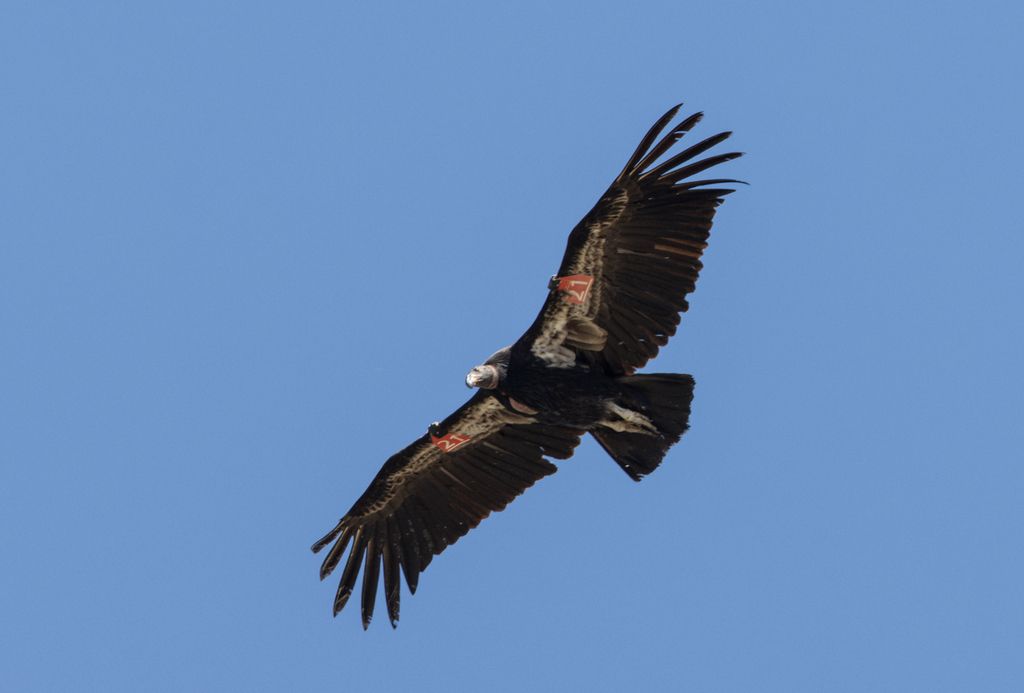
Swainson’s hawks are a close relative of our year-round resident, the Red-tailed hawk and are similar in size and habitat requirements. Swainson’s hawks have two color morphs; a light morph and a dark morph, and although both sexes wear the same colors and patterns, females are typically slightly larger and heavier than males. In the light color morph both females and males sport a chocolate-colored “bib” with a white throat and face patch and bright yellow rostrum. Their tails are barred and their flight feathers are dark with a light-colored leading edge - a unique color pattern in North American raptors. Dark morphs are all dark chocolate brown with the same barred tail with a light patch just under it. Swainson’s hawks occur roughly west of the Missouri River during the warm summer season and like some people I know, take off for warmer regions when the summer weather turns chilly.
In California, Swainson’s hawks nest primarily in the Central Valley although there are small populations in northeastern California, Shasta Valley, Owens Valley and the Mojave Desert. Historically it was estimated that California supported over 17,000 breeding pairs but in 1980 that number had declined to only 375 breeding pairs. In 1988 it was up to an estimated 550 breeding pairs statewide and in 2005 the number of breeding pairs had inched up to just under 2100. They were listed as a threatened species in California in 1983 due primarily to habitat loss.
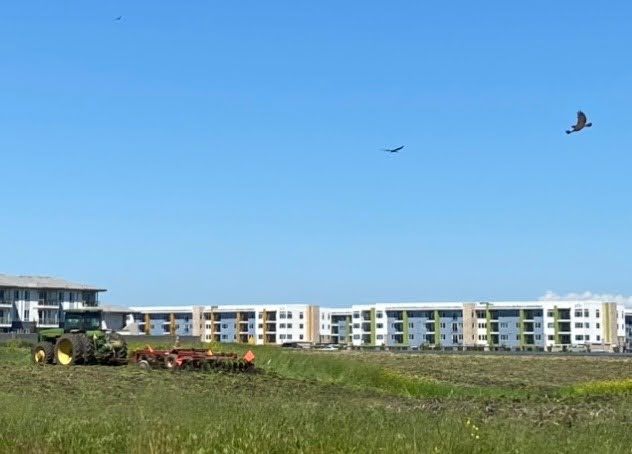
An endorsement of their adaptability, Swainson’s hawks have not only learned to co-exist with many agricultural practices but they in fact thrive alongside irrigated pastures and tractors which has helped their number improve. Swainson’s hawks have learned that the rumble of a tractor pulling a harrow disk equates to what we might consider a drive through meal. They’ve also learned that when a rancher turns on the water and begins to flood irrigate a pasture, that advancing waterline flushes out underground rodents resulting in a heavenly smorgasbord of unwelcome pests to the human behind the water controls. I’ve seen 20 hawks lined up following the waterline with 20 more circling waiting their turn at the chow line. If their migratory journey hasn’t impressed you, their rodent/lizard/grasshopper eating capacity surely will. These gourmands will gorge themselves so heavily that they realistically cannot lift themselves off the ground for a time which results in oodles of hawks hopping about like unathletic feathered toads. Mutualism at its finest - the hawks get a gourmet meal and farmers and ranchers get free pest control.
If their stamina and gluttony doesn’t impress you, maybe this will. It’s not uncommon for wild Swainson’s hawks to live and continue breeding into their 20’s. But that’s not just hanging around and raising babies in the laid back summer months. During those 20 years, that individual bird has flown about 260,000 miles to safely return to the same area, perhaps the same tree, that held the nest that it fledged from. That’s undeniably impressive!
RECENT ARTICLES