


Enjoying Outside! - Pestiferous Foxtails
I’m sure a lot of us already know the danger that foxtails pose to our dog and cat friends and hopefully nobody reading this minds, but I’d like to try extra hard to make sure that everyone reading this knows about the menacing nature of foxtail barley.
Foxtail barley (Hordeum
sp.) is a member of the grass (Poaceae) family and is native (I just learned this!) to North America. Although it is a native species, it is considered “weedy” because it readily establishes and can outcompete other species because it thrives in both moist and drought prone environments. It is also known by other cute little woodland creature names such as squirreltail barley, bobtail barley and skunktail barley but lemme tell you, it’s not as endearing as the common names suggest. The name “foxtail” is a general term for grasses in the
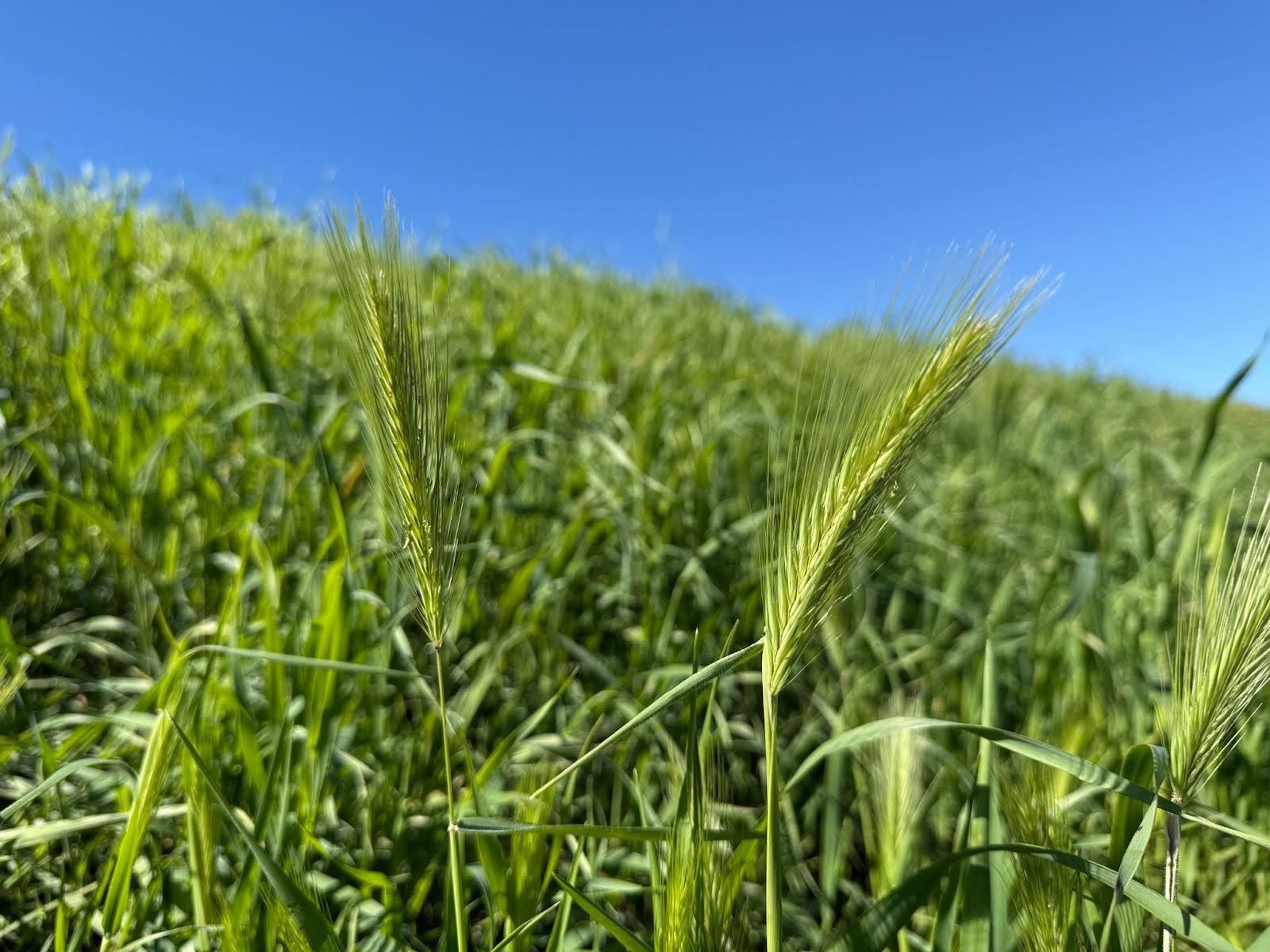
Hordeum (barley genus). Foxtail barley (foxtail) is a perennial bunch grass that thrives in previously disturbed areas and is somewhat unique in that it is tolerant of saline and/or alkaline soils where the majority of other upland species cannot survive. Foxtails can germinate in the spring or the fall and those that germinate in the fall resume growing early the following spring often outcompeting other spring germinating plant species. Because it is salt tolerant it can be found on coastal beaches and along the edges of brackish and salt marshes as well as road sides, yards and fields. Foxtail usually doesn't exceed one three feet tall when left undisturbed but if the plants are mowed, they can flower and produce seed much closer to the ground as well. Seed heads are pale green and appear as a square-shaped (characteristic of barley) bushy spike. The stems are erect with soft blue-ish gray-green rolled leaves and seed heads have long awns. Since plants can’t get up and wander about, they need a method to disperse their seeds. That method for foxtails is mainly by hitchhiking on other things that move from one location to another. Up close, individual seeds look like a fox’s bushy tail and their shape helps them to attach to your pets and you. And because the seeds are barbed, they can get embedded in our furry friend’s ears, eyes and skin and often requires a vet’s steady hand (and your pocketbook) to remove them. They can be especially dangerous and sometimes fatal if they get into your pets nose or blood stream.
Right now, at least for a few more days, the foxtails are still green and soft. But, as the temperatures rise and the vegetation begins to dry out, the hazards posed by foxtails begin to rise with the mercury. As the seed heads mature they become golden in color and very fragile. This is when they are the most dangerous to our pets as they are easily broken apart from the plant. Eventually the seeds get harder and drop to the ground where if stepped on they can embed themselves into your bare feet or your pet’s paws.
Although it seems nearly impossible to avoid foxtails there are some ways to help you and your furry buddy continue to enjoy hiking through the Berryessa Snow Mountain National monument or a leisurely stroll through your neighborhood.
- Avoid areas where you’ve seen foxtails before and pay attention to where your friend wanders - especially during the summer months when the foxtails are dry and brittle
- Keep your dog’s fur trimmed and short so there’s less surface for the seeds to attach to
- Do a quick nose to tail check for foxtails after each walk or hike being sure to check between their foot pads
- A basket muzzle may help keep their nose and mouth clear of foxtails while still allowing your pup to pant
If your furry friend is coughing, gagging, sneezing, snorting or pawing at their face or ears or limping, there may be an embedded foxtail that you aren’t able to see. It’s best to have them checked out by a vet to make sure they are all clear. If they have picked up a foxtail, removing it as soon as possible is usually less invasive for your companion and your wallet.
Just by spending a little extra time and effort, you and your pets can still Enjoy Outside even during foxtail season!
RECENT ARTICLES