


Monumental Questions - What Kinda Salmon Ya Got?
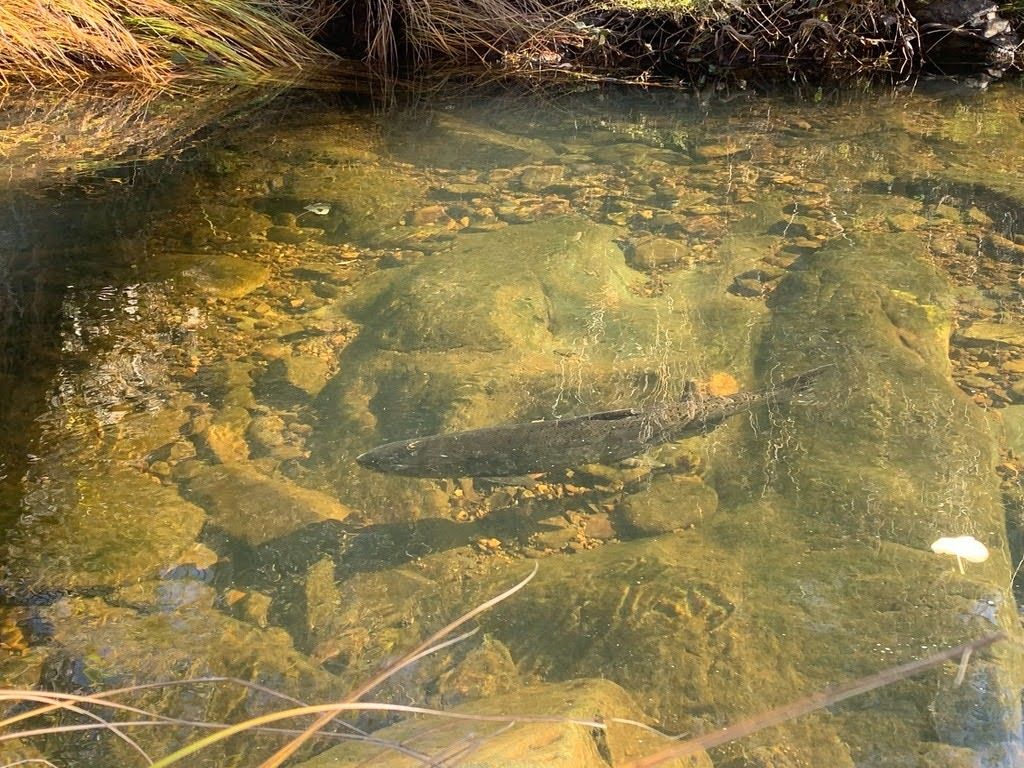
We got pan-seared salmon, oven-baked salmon, air fried salmon, pesto salmon, poached salmon, salmon tacos, smoked salmon, salmon ceviche…But before all of that we got California Coastal Chinook Salmon and Northern California Steelhead.
I’m talking about the salmon species that call the Berryessa Snow Mountain National Monument (monument) and surrounding region home - at least for part of their lives.
Salmon are classified into two groups, Pacific Salmon, genus
Oncorhynchus, and Atlantic Salmon, genus
Salmo. I bet you can guess the logic between these two groups but if not, here’s a hint…salmon and trout in the genus
Oncorhynchus are native to the tributaries of the North Pacific Ocean. The salmon species that occur in the Monument include California Coastal Chinook (also called King) Salmon (Oncorhynchus tshawytscha) and Northern California Steelhead (Oncorhynchus mykiss irideus) utilize the fresh, flowing waters of Cache Creek and Putah Creek and then follow their watersheds all the way to the Pacific Ocean; which makes having open, unobstructed pathways for them to follow to and from extremely important to their species survival and success.
Before we get to that, we should address
this
situation. Salmon classification and lifecycle involves several complex words. First the Pacific Salmon genus,
Oncorhynchus is a mouthful itself and translates to mean “bent nose” referring to the hooked upper jaw that male salmon develop during mating season. All salmon and steelhead species are
euryhaline which means that they can tolerate various levels of saline and migrate from freshwater to brackish/saltwater during their lifecycles. Species that do this are called
anadromous which means that they spend part of their lives in the freshwater creeks, streams and rivers and part of their lives in the salty ocean water. To complicate things even further, true salmon species are
semelparous which means that they die shortly after spawning; steelhead are
iteroparous meaning that they do not die after spawning and are able to return to sea and inland again and again. To add another layer of fascination and complication, steelhead are a form of Rainbow Trout. A steelhead is
euryhaline,
anadromous and
iteroparous. A Rainbow Trout is
potamodromous which means that they only migrate between freshwater rivers and lakes and do not go to the ocean. Offspring from Rainbow Trout are capable of becoming a steelhead and offspring from steelhead are capable of remaining Rainbow Trout.
Are you with me?
Salmon and steelhead both spawn in shallow, gravel bottomed freshwater creeks and streams - the same gravelbeds that their parents used and that they themselves hatched in. Female salmon can lay up to 10,000 eggs but sadly less than one percent of them will survive to produce the next generation. When the eggs hatch and the fry (recently hatched but old enough to search for food) are mature enough (then called fingerlings) they begin to navigate downstream into larger creeks and rivers. As they mature and become juveniles and then adults, they migrate to sea (anadromous and
euryhaline) where they may remain for as long as seven years. During the trek to sea through their natal watershed, salmon imprint on the unique pattern of the Earth’s magnetic field. Once they are ready to spawn, they return upstream to their gravelly birthplace using their internal magnetic compass and their powerful sense of smell. A quick review - both male and female salmon die after spawning (semelparous) while many steelhead return to the ocean and then again travel upstream to spawn again in the following years (iteroparous).
Whew, got it?
All salmon and steelhead are active predators throughout their lives. The young consume aquatic and terrestrial insects, worms, small amphibians and fish eggs. Adults in the ocean primarily eat other fish, crustaceans, squid and small octopus. Adults are largely preyed on by sea lions and sharks and are the primary food source for orcas. Once adult salmon return to freshwater, they stop eating entirely and can go six months without food. Salmon and steelhead endure constant threats at every stage of their lifecycle, many caused by human activity. Damming of waterways causes migration barriers for young going out to sea and adults returning to spawn, rising water temperatures reduces oxygen levels and alters food webs and egg success, and pollution and habitat destruction cause damage to fragile ecosystems and immune systems. To learn more about salmon and steelhead conservation and how you can help visit
https://www.fisheries.noaa.gov/west-coast/endangered-species-conservation/what-you-can-do-help-recover-salmon-and-steelhead-west-coast.
Some additional salmon facts:
-The earliest known salmon species in North America was the Saber-toothed Salmon. It was discovered in fossils from seven million years ago and grew up to 12 feet long!
-Pacific and Atlantic salmon are distant relatives but today have differing numbers of chromosomes.
-Salmon have a keen sense of smell and use it for feeding, reproduction, migration and predator avoidance. They can smell chemicals down to one part per million.
-Once in saltwater, an individual salmon can swim nearly 35 miles a day!
-Salmon can migrate over 1,800 miles total and over 31 miles a day to reach their spawning grounds and can jump about two and a half feet to get over obstacles in the water.
RECENT ARTICLES