
PROTECT AMERICA'S ROADLESS FORESTS

For nearly 25 years, the Roadless Area Conservation Rule has protected 58.5 million acres of America's wildest forests, California alone holds 4.4 million acres of roadless forest. Now, Agriculture Secretary Brooke Rollins has officially announced plans to rescind these protections, threatening 45 million acres of roadless areas nationwide.

What's at Stake Nationwide:

  • Wildfire Safety: Scientific research shows 95% of human-caused fires start within half a mile of roads and are 4 times more likely near roads than in roadless areas. Eliminating roadless protections dramatically increases fire risk.
  • Clean Water: Roadless areas protect watersheds that supply drinking water to 60 million Americans.
  • Wildlife Habitat: 57% of America's most vulnerable species depend on roadless areas for survival.
  • Recreation: 156 million Americans visit national forests annually, many seeking the backcountry experience these areas provide.
  • Cultural Resources: Sacred sites and traditional use areas important to local Tribal Nations.

Local Impact: Berryessa Snow Mountain National Monument


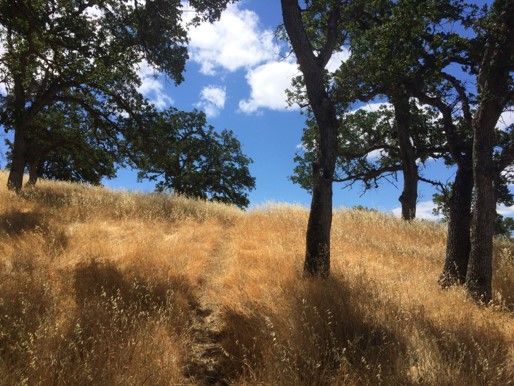
Throughout Mendocino National Forest, 154,332 acres of Raodless Areas would lose protection, including nearly 30,000 acres within Berryessa Snow Mountain National Monument. In addition, the Berryessa Snow Mountain National Monument is surrounded by designated roadless areas on three sides. If the roadless rule is rescinded, roads could be built right up to the monument boundaries and may divide hiking trails within the monument with new roads. This poses a serious fire threat: scientific research shows that 88% of wildfires are human-caused, and wildfire ignitions are 4 times more likely near roads than in roadless areas.

TAKE ACTION NOW

Days
Hours
Minutes
Seconds

Comment Period is Closed

Time is running out! Submit your comments supporting the Roadless Rule immediately. Comment period ends September 21st!


Sign on to Tuleyome's letter below or draft your personalized comments and submit to Secretary Rollins on the Federal Register.


For more information on how to participate in the public comment process, contact Tuleyome Executive Director Sandra Schubert.


Sample Grassroots Letter


Dear Secretary Rollins:


The Roadless Area Conservation Rule should not be rescinded. The Rule should be kept in place so that these areas can continue to provide the following benefits to the American public. The 45 million acres of remote, wild and roadless forests across our country are the few pockets of unbroken forest where nature can flourish undisturbed. The longer that are left alone and the longer that trees are left to grow, the more time a fully-fledged, interconnected forest ecosystem has to develop with all of its beauty and benefits.


Our national forests are critical for our drinking water. They are the headwaters of many of our great rivers and one of the largest sources of municipal water supply in the nation, serving over 60 million people in 3,400 communities in 33 states.


Roadless areas provide vital habitat and migration corridors for species. They include diverse forests, wetlands, canyons and other undeveloped lands that are critical to our nation's ecological health. Roadless areas help ensure that migratory game corridors for species such as Tule elk and remain intact and protected from roads and the industrial development roads enable. 


These spaces are important to many indigenous communities, providing critical to food security and sustaining cultural practices, including hunting, fishing, and gathering forest plants for food, medicine, and traditional arts and ceremonies.


Roadless areas are important for outdoor recreation, which generates $730 billion annually, offering offer abundant outdoor recreation opportunities such as hunting, fishing, camping and other activities. Every year, millions of people take advantage of the free (or extremely affordable) access to these public lands.


Rolling back the Roadless Rule will not protect communities from wildfire and may in fact lead to more wildfires. Scientific research shows that 88% of fires are caused by humans, and 95% of human-caused wildfires start within half a mile of a road. Wildfire ignitions are 4 times more likely near roads than in roadless areas. Roadless areas serve as critical buffers that reduce fire ignition points and help protect surrounding communities.


We as the American people, want our forests protected and preserved. It is imperative that we keep our national forests wild and road free. Do not rescind the Roadless Area Conservation Rule.


Sincerely, 

RECENT NEWS
By Kristie Ehrhardt August 26, 2026
The 19th Amendment to the Constitution - granting women the right to vote - was certified on August 26, 1920. In commemoration of this, in 1973 Congress designated August 26 as "Women's Equality Day" to remind us of the heroic women who advanced the Women's Suffrage movement. In recognition of Women's Equality Day, Tuleyome is highlighting three women who are dedicated to conservation: Sheila Pratt (Cache Creek Conservancy), Corky Quirk (NorCal Bats and Yolo Basin Foundation), and Cathy Little (Yolo Habitat Conservancy). Please share in a round of applause for our friends for their passion and dedication to conservation.
By Kristie Ehrhardt August 25, 2026
The 19th Amendment to the Constitution - granting women the right to vote - was certified on August 26, 1920. In commemoration of this, in 1973 Congress designated August 26 as "Women's Equality Day" to remind us of the heroic women who advanced the Women's Suffrage movement. In recognition of Women's Equality Day, Tuleyome is highlighting three women who are dedicated to conservation: Corky Quirk (NorCal Bats and Yolo Basin Foundation), Sheila Pratt (Cache Creek Conservancy) and Cathy Little (Yolo Habitat Conservancy). Hear about Cathy's journey below and learn about Sheila here and Corky here. Please share in a round of applause for our friends for their passion and dedication to conservation. I received my Bachelor’s Degree at UC Davis in Plant Biology and immediately moved into environmental consulting when I graduated. For the next few years, I had the opportunity to botanize and see lands throughout California. I was working on large river projects and became interested in restoration of riparian habitat and decided to go back to school and get my master’s degree at Chico State. I continued working on restoration projects and started to be more interested in conservation work. I spent the last 16 years working for the Center of Natural Lands Management where I directly managed and acquired lands with listed species and sensitive habitats and led the northern California group. Recently I made a career move to the Yolo Habitat Conservancy where I am now contributing to conservation work in my local County. Through growing up in California I have been able to spend a large amount of time in vast beautiful wilderness areas, but have also witnessed conversion of many lands to development. I have always had a draw to natural lands and observing the amazing intricate ecosystems that they support. When I was working in environmental consulting on designing, building, and monitoring restoration sites, I saw these lands being transferred to entities that managed them in perpetuity, and I knew that I wanted to be part of the effort. I have spent most of my career now doing just that. Throughout my time working in conservation, I have had so many long-term field ecologists inspire me to continue doing this work. Watching others work tirelessly over many years to manage and protect natural lands, and collaborate and share their knowledge, has been so motivating. There is nothing more enjoyable than spending a day in the field with other ecologists and sharing enthusiasm about some small moment of observation, and always learning some new tidbit of information about a certain species or behavior or management tool. My advice to young women starting their career in the environmental/conservation/non-profit sector would be to just get out there and start gaining experience in whatever seems interesting and then collaborate and talk to as many people to learn about all the different opportunities. There are so many aspects of conservation and environmental work and the more time you spend working in it, the more you will be able to figure out how you want to contribute to the community as a whole. I would suggest taking as many opportunities as you can and working with as many different people as possible. Listening to people’s backgrounds, experiences, and perspectives can be valuable in navigating your path. I would recommend always advocating for yourself, being open and honest about your abilities, and committing to and communicating your beliefs regarding your work.
By Kristie Ehrhardt August 25, 2026
The 19th Amendment to the Constitution - granting women the right to vote - was certified on August 26, 1920. In commemoration of this, in 1973 Congress designated August 26 as "Women's Equality Day" to remind us of the heroic women who advanced the Women's Suffrage movement. In recognition of Women's Equality Day, Tuleyome is highlighting three women who are dedicated to conservation: Corky Quirk (NorCal Bats and Yolo Basin Foundation), Sheila Pratt (Cache Creek Conservancy) and Cathy Little (Yolo Habitat Conservancy). Hear about Corky's journey below and learn about Cathy here and Sheila here. Please share in a round of applause for our friends for their passion and dedication to conservation. I came to bats late. I have been involved with outdoor recreation and environmental education most of my life. I have a BS in Natural Resources with an emphasis in Environmental Education from Humboldt State. But, it was learning about them at the Yolo Basin Foundation (YBF) where I found my love for bats. When I started at YBF, there was a woman who we contracted to do 3 programs a summer and I started volunteering for her organization in 2004. I was inspired to work in the conservation/preservation/ecology sector because my parents loved nature. We did many trips to State and National Parks where we camped and hiked. Over the years I have met many people who work in the conservation field and have encouraged me. I greatly enjoy sharing knowledge with the various bat biologists from environmental consultants, to the State to the US government agencies. There are two projects that I am most proud of. I started NorCal Bats in 2006 and now see almost 40,000 people each year to educate them about bats from schools, libraries, garden clubs, festivals, campgrounds and more. I'm also very proud of how popular the Yolo Basin Foundation Bat Talk and Tour program has become. When I took over the program in 2006 we did about 3 nights a summer, now we are conducting about 70. Some of the most profound moments and memories for me are of all the people who have learned about bats both through the Yolo Basin Foundation's Bat Talk and Tour programs and the presentations through NorCal Bats. I don’t have a specific favorite memory but I am proud of the number of times people come to me and say that they were hesitant or afraid of bats, and no longer are due to the presentation. Periodically, when I take the bats to schools through NorCal Bats, I'll have a student who is very fearful. Sometimes they hide under a desk or sit very close to the teacher. I'm most proud when they overcome that fear, ask questions and especially if they say that the bat is cute.