


Science Corner - Himalayan Blackberry
Earworm alert: Do you remember the catchy jingle from the late 1980’s that goes something like “… summer, summer fruits from California; it wouldn’t be summer without ‘em”. Whether you remember the jingle or not, I’m willing to bet that most everyone is pretty familiar with at least some of those mouthwatering fruits that the jingle is referring to. Many of those fruits belong to the same family, the rose family (Rosaceae).
The Rose family contains over 3,000 different species with 90 genera. Commonly recognized members of this family range from the native California Wild Rose to the enchanting ornamental roses we find in the floral refrigerator. Other members of the family include important agricultural crops. Did you know that fruits like lumpy bumpy blackberries are taxonomically related to almonds and fat, juicy peaches?
The Rose family is divided into four subfamilies based on how and where the fruit develops on the plant:
- Amygdaloideae which contains the stone fruits (called drupes),
- Maloideae which contains apples and pears (called pomes),
- Rosoideae which holds flowers like dandelions with dry fruits that do not open (achenes) and plants that produce aggregate fruit (drupelets) like blackberries,
- Spiraeoideae with dry fruits that open on the side (follicles) - this group is an important food plant for many larval butterfly and moth species.
Stone fruits like almonds, apricots, cherries, nectarines, peaches and plums, as well as new-fangled fruits like pluots (apricots x plums) or cherryums (cherries x plums) have fleshy fruit around a large central pit. Pome fruits like apples, pears and quinces also have fleshy fruit surrounding a core with several small seeds. Aggregate fruits including blackberries and raspberries are clusters of many “fruitlets” each containing a tiny seed. Strawberries are also aggregate fruits but are extra special because their seeds are on the outside. It’s one of those “things that make you go hmmmm” (another earworm!).
The Rose family not only contains many prized garden flowers and valuable crops, it also contains several petulant woody shrubs, vines and ground covers that can easily escape cultivation. Which finally leads me to the focus of this article…
Himalayan blackberry - are you a friend or foe?
This obnoxious, antagonistic, aggressive woody vine with its scrambling canes and fearsome hooked spines...it feels as though they reach out and embed their hooked thorns in you as punishment for merely glancing at their swarthy, sweet berries glistening in the sunlight. They put those mean apple trees in the Wizard of Oz to shame. Actually, I wish those dumb vines would throw their fruit at me, it would save me a lot of time with the tweezers pulling out shed stickers.
Known for their extreme vigor and rapid growth rate, Himalayan blackberries (Rubes discolor) quickly spread and overtake disturbed areas. In many regions it is classified as an invasive species and a noxious weed. They can spread vegetatively from its perennial roots or by rooting when their arching stems, called canes, touch the ground. The seeds are spread by all kinds of wildlife ranging from birds to bears and everything in between that munches on fruit; which bundle them nice and neat in little, ready to grow scat packages. New stems can grow to nearly 35 feet in length and be almost two inches thick during their first year of growth. The leaves are palmately compound usually with five leaflets. Even the leaves have stupid thorns on them - ugh. New stems do not produce fruit and second year stems typically produce several side shoots that produce white to light pink flowers. The flowers appear in late spring to early summer (although it’s early August and I’m still seeing them in flower), have five petals and look like a typical native rose with both male and female parts. The fruit is not scientifically called a “berry” but rather an aggregate fruit with many drupelets that are, you guessed it, dark purple or black when ripe.
Himalayan blackberries were introduced to the United States in 1885 and by 1915 were widely cultivated. By 1945, the vines escaped cultivation and began thriving in their new environment, quickly becoming a noxious weed. It not only grows rapidly above ground but its root system is huge and can reach water sources in other areas. The canes can hold on to water which allows it to survive during droughts yet, ironically, blackberries are also ladder fuel for wildfires. They are highly combustible and produce dense litter. Because of its growth rate, seed spread, drought tolerance and ability to grow in poor quality soil, Himalayan blackberry is very difficult to contain.
Left to its own devices, Himalayan blackberry will spread over the top of other plants, climb fences and trees and overtake structures and vehicles parked for too long. The sprawling canes can reach under siding and get tangled in plumbing and electrical wires. It will also form impervious thickets that can fill up creek beds, abandoned lots and untended tracts of land. The United States Department of Agriculture recommends digging out the roots and then plan to keep digging for at least a year to keep them from reestablishing.
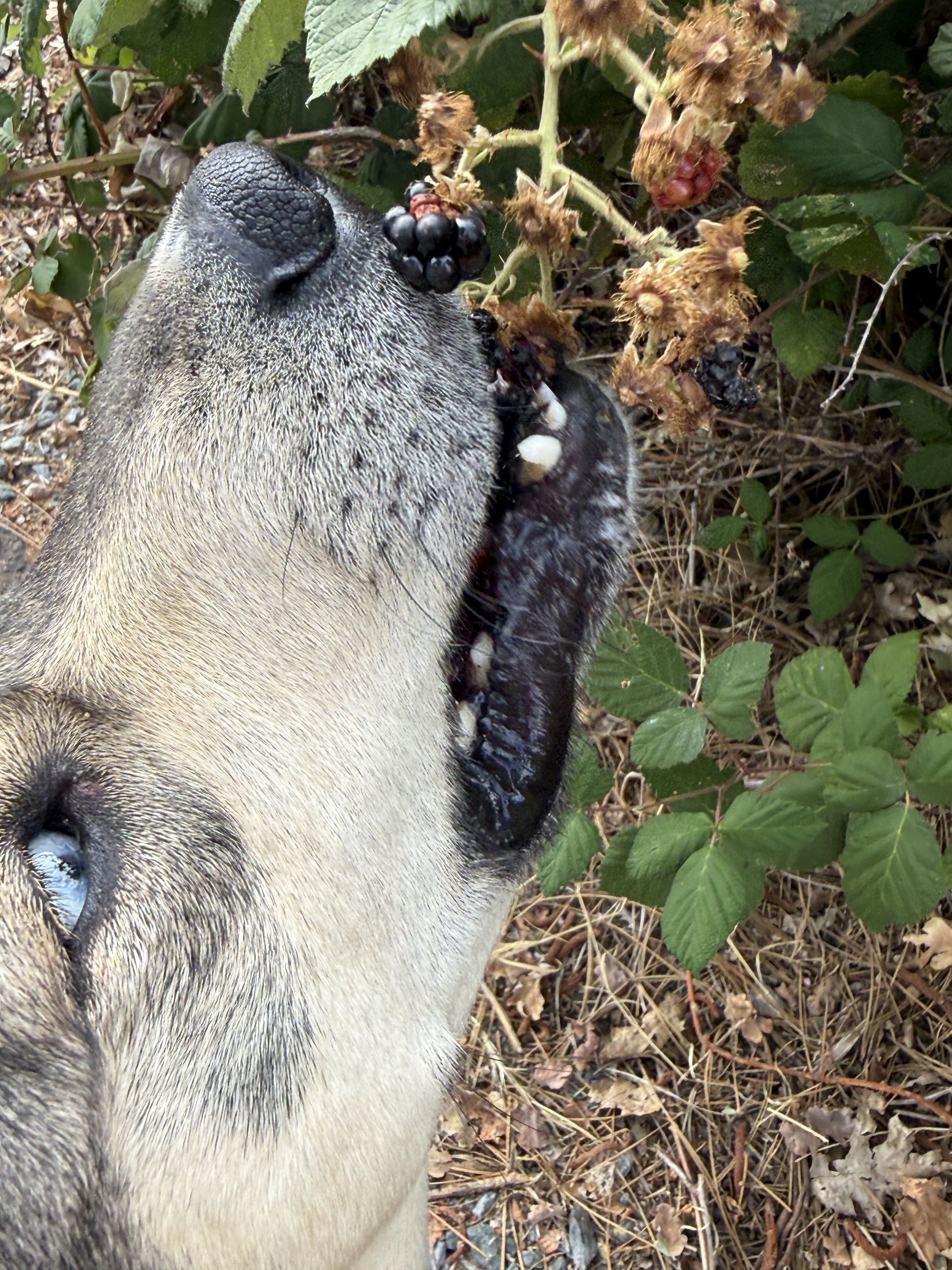
Oh, but those berries! We’ve been noshing on them for about a month now. My dog, Ruben has also developed an affinity for them. He doesn’t even wait for me, he finds his own (pictured above). We’ve been putting them in salads and lunchboxes nearly everyday while blackberry cobbler, jam and short cake have all been on the dessert menu recently. They’re super good for you too. They contain high amounts of soluble and insoluble fiber and those nearly black berries just scream antioxidants. They have a low glycemic index which provides a steady blood sugar response and are high in vitamins C, K and manganese which helps your immune system and aids in tissue repair. Plus they taste amazing! Ruben and I are going to keep snacking on the berries, dodging the thorns as best we can.
RECENT ARTICLES