
Science Corner - Pacific Chorus Frogs

Kristie Ehrhardt • September 10, 2026

What do you call an itty bitty frog with sticky toes and a high octane singing voice? Not sure? Biologists have the same problem. Inarguably, our subject is a frog so that part is pretty easy but it gets a little muddy after that. The Pacific Chorus Frog, aka Pacific Tree Frog, aka Northern Pacific Tree Frog are all seemingly appropriate common names for a teensy-weensy frog that can climb straight up a nearby tree trunk, dangle from nearby vegetation by the tip of a toe, or scale an interior shower wall like spiderman (ask me how I know) and, is a troubadour of the amphibian world. Not only are scientists not sure what to casually call it, they also wobble between various scientific names as well. They probably should have written in pencil because the species has had a taxonomic journey going from the genus Hyla (tree frogs) to Pseduadris (chorus frogs), then briefly to Hyliola, which resulted in taxonomic arguments, and then finally back to Pseudaris which is where the species is currently filed. Fun fact #1: Pseudaris translates to “false locust” which makes sense for such a wee frog.


Although biologists are still working out the taxonomy, generally three species are recognized - at least for the time being. P. regillla is the northern species and occurs in northwestern California, Oregon and Washington; P. sierra is the central species that occurs in our region south to Central California, and parts of Nevada, Idaho and Montana; and P. hypochondriaca is the southern species, sometimes called the Baja California Treefrog. Fun Fact #2 - all three used to be considered one species because they all look identical but have since been separated out based primarily on their ranges.


The Pacific Treefrog/Northern Pacific Tree Frog/Chorus Frog (I’m just going to call them “tree frogs”) is about two inches long from snout to the base of their spinal column (urostyle for folks that like technical terms). The male tree frogs are normally a bit smaller than the females and if you flip them over (which they largely disapprove of) you’ll see a dark “turtleneck” under their chin. This dark band is their vocal sac that stretches when filled with air out to create that glorious melody that lures the ladies. Tree frogs can be shades of brown and green with light colored bellies and usually yellow on the undersides of their hind legs. Their back and sides usually have a variety of darker spots and they always have a signature dark eye strip that extends across their nose and eyes to their shoulders.


Tree frogs can alter their coloration to match the seasons and their surroundings. Fun Fact #3 - Pacific Tree Frogs can not only change background colors but they can yo-yo between being spotted or not! Tree frogs are overall slender with long legs and relatively long toes that have partial webbing and are unique in that the tips of each toe is modified to include a sticky disk. It is this disk that allows them to cling to surfaces to climb and ambush prey which includes insects and other invertebrates. 


The range of the three species complex combined includes British Columbia south to Baja California and from the Pacific coast east to Idaho and Montana. There is even a small population surviving in a pond on an island near Ketchikan, Alaska after an intentional introduction in the 60’s. Tree frogs can tolerate a vast variety of habitat types and climates from sea level to high altitudes. They commonly occupy naturally occurring and artificial wetlands such as lakes, ponds, streams and even neighborhood pools and storm drains. They need persistent water for breeding and to keep their skin moist but they also utilize surrounding upland habitat such as chaparral, grasslands, woodlands and even pastures, fields and parks. Because their range is so vast and varied, mating begins in early winter and lasts through early spring depending on their habitat and weather conditions. Male tree frogs sing to attract females but their serenading also attracts other males who join in the choir creating quite a cacophony that can be heard from over a mile away. Like salmon, tree frogs usually return to their own former nursery to breed. Ten to hundreds of eggs may be attached to or under submerged vegetation and hatch in about three weeks. Like their parents, tadpoles are also tiny and are dark brown-black from above with squishy whitish bellies (like orcas - camouflage from top and bottom). They nosh on algae, bacteria and organic matter until they fully metamorphosis into adults in about six to twelve weeks depending on habitat conditions.


Drought conditions, non-native species introduction, loss of habitat, pollution (this is a big one because all amphibians have thin skin that readily absorbs air, water and chemicals directly into their bodies) and other human-caused impacts have created a global decline in the amphibian population. Fortunately, our regional tree frog populations appear to be holding fairly steady.

RECENT ARTICLES
By Shai Demus September 10, 2026
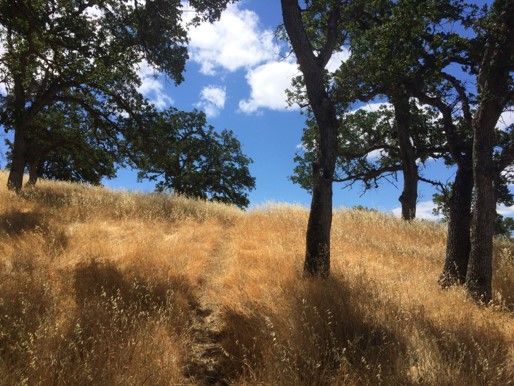
 Yosemite National Park belongs to the people. It should not be carved up to benefit a private developer. The National Park Service is working on a new proposal to give up a quarter-mile strip of land inside Yosemite National Park in exchange for property elsewhere in California. What's the goal? To provide a private developer with a new road and direct access from his 83-acre planned real estate development abutting the park to one of Yosemite’s central roads. This proposal deserves the public’s attention. The property is owned by Kingsbarn Realty Capitol, whose CEO wants to build a road connecting the private property to Yosemite. Previous efforts to establish this private access were rejected, including in federal court. The National Park Service has repeatedly refused similar requests for more than two decades. Our National Parks should not be carved up for private profit. National Parks were established in this country to protect America’s most interesting and iconic places for everyone to access, not to provide special access or development opportunities for private interests. Your action is especially timely because the Park Service has acknowledged that no final decision has been made, meaning there is still an opportunity for public scrutiny and opposition. Any eventual land exchange should be subject to federal laws, environmental review, and public notification requirements. Tell the National Park Service: Keep Yosemite public We can’t allow a national park to be reshaped around the interests of a private developer. Yosemite is a national treasure. Its lands, wildlife, cultural resources, and landscapes belong to the American people, and they should remain protected for generations to come. We have seen this kind of proposal before, and the public and the courts rejected it. We must make sure it does not come back through the back door. Yosemite is worth protecting. Speak up and keep it public. TAKE ACTION: Tell Interior Secretary Burgum to Keep Yosemite Public! Here’s How: Call your elected officials. Here is a sample script: “Hi, my name is [NAME] and I'm a constituent from [CITY/ZIP]. I'm calling to urge [Representative/Senator NAME] to publicly oppose the National Park Service's proposed land exchange inside Yosemite National Park, which would give a billionaire private developer, Kingsbarn Realty Capital, new road access through park land. I'm also asking [him/her/them] to call on Interior Secretary Doug Burgum to reject any further privatization or sell-off of our public lands. Yosemite belongs to the public, not private developers. Thank you.” Send a letter or email. You can use this template: Dear [Representative/Senator NAME], I’m writing as your constituent to urge you to oppose the National Park Service’s proposed land exchange inside Yosemite National Park. This proposal would trade a strip of park land to provide Kingsbarn Realty Capital, a billionaire private developer, with new road access from an 83-acre private property to one of Yosemite’s central roads. This is not the first attempt to establish this private access – previous efforts were rejected, including in federal court, and the Park Service has denied similar requests for more than two decades. Our public lands exist to serve the public, not to create development opportunities for billionaires. I ask that you publicly oppose this proposal and call on Interior Secretary Doug Burgum to keep Yosemite, and all our national parks, fully public and protected for future generations. Thank you for representing our community on this issue. Sincerely, [NAME] [ADDRESS/ZIP] Not sure who represents you? Find your U.S. Representative and Senators here .
By Nate Lillge September 10, 2026
I first learned of Tuleyome in 2015 when the Berryessa Snow Mountain National Monument was created and it was in the news. I thought then of what a marvelous and impressive, important effort this was by so many people, including Tuleyome. Importantly it was so inclusive, involving people of so many different backgrounds and interests, getting the buy-in from the community at large. Once I learned about Tuleyome (and the meaning of the name - deep home place) and some of its conservation efforts, I decided that I wanted to contribute, at least in a small way. I come from a farming and research background, and newly retired, wanted to be more involved in conservation efforts and Tuleyome was local and ideal! I think the aspect of Tuleyome’s work that most resonated with me is the focus on educational programs for young people and adults. As an older person, I know that experiences we have in childhood have life-long impacts. Let them be positive and enriching experiences and let them include conservation and the natural world! Young people have many demands on their time and attention and most have limited exposure to nature. Regardless of our career paths, an appreciation of nature is vital for the well-being of us all. As a docent helper this past spring I was touched by three students who said this was the first time they had been out in nature. In 2024 I had the opportunity to participate in the Certified California Naturalist Program (CalNat) and was inspired by the lead instructors Geoff Benn and Nate Lillge, and invited speakers. And, I love the new manual about the Berryessa Snow Mountain National Monument , especially the geology section. My donations can be used toward any need but I particularly want to support the educational efforts for young people. The National monument is a treasure in our backyards. Its creation and subsequent enlargement in 2024, reminded me of the adage “think globally, act locally”. The multi-pronged conservation efforts of Tuleyome and its commitment to a diverse regional community are such important and positive actions. I see Tuleyome as a small but powerful inspiring organization.
By Kristie Ehrhardt September 10, 2026
Public Lands Day is a national one-day party to celebrate the largest volunteer effort to benefit the wellbeing of our public lands. Because it’s so fun though, lots of organizations celebrate all week long with events beginning on Monday, September 21st. There are lots of activities to participate in such as trail building and maintenance (something Tuleyome doesn’t save up for one designated day, with your help we do it all year long!), planting native trees and vegetation, repairing and restoring habitat and structures, endangered species monitoring, cleaning up trash and removing invasive plants and much much more. If you can’t participate in person, there are virtual talks and even hikes that you can join without having to change out of your pajamas. Last year alone there were over 55,000 volunteers at more than 900 events across the country getting dirty with their community to spiff up those public lands that are near and dear to our hearts. The theme for National Public Lands Day (NPLD) this year is “Caring for Our Shared America” and because it is America’s 250th birthday, we think the turnout will be even more Monumental (ahhh, snuck that one in!). National Public Lands Day began in 1994 and occurs annually on the third Saturday in September. The yearly event is organized by the National Environmental Education Foundation (NEEF) in partnership with the National Park Service and other agencies. NEEF is a non-partisan, non-profit organization sanctioned by Congress in 1990 through the National Environmental Education Act. NEEF focuses on improving and maintaining public access to the environment for enrichment in our daily lives. Public Lands include forests, national monuments, wildlife refuges, grasslands, marine sanctuaries, lakes and waterways, city, county and state parks and beyond - spaces managed by public agencies and non-profits that provide places for public recreation and connection to each other and the environment. While planned events focus on improving the environment and opportunities for education, recreation, and the betterment of physical and mental health, a beneficial side effect is the kinship that naturally develops between those coming together for a common purpose. Some interesting events in the Cosumnes River Preserve include invasive plant removal by canoe, maintenance on their fabulous boardwalk and a family-friendly guided nature walk. Visit NEEF's website to find other events throughout the nation. If you’re interested in planning your own National Public Lands Day event, NEEF can help you with that too. To volunteer in your own community, contact local conservation groups, regional, state and federal agencies. National Public Lands day provides an opportunity for all nature lovers from seasoned hikers with callouses and stories to go with them to those just breaking in their first pair of hiking boots, a chance to work side by side to show appreciation for our shared public lands. If you aren’t able to volunteer you can still help better our public lands by following and practicing the Leave No Trace principles while recreating: Plan ahead and prepare Travel and camp on durable surfaces Dispose of waste properly Leave what you find Minimize campfire impacts Respect wildlife Be considerate of others Practicing these ideas minimizes our impact on the environment, wildlife and others. These principles are as important in our local neighborhood parks as they are in our national parks and monuments. Join Tuleyome in celebrating Public Lands and an enduring commitment to conservation - not only on September 26 but everyday. Now, go take a hike!