
What is the Agents of Discovery App?

Kristie Ehrhardt • June 23, 2021

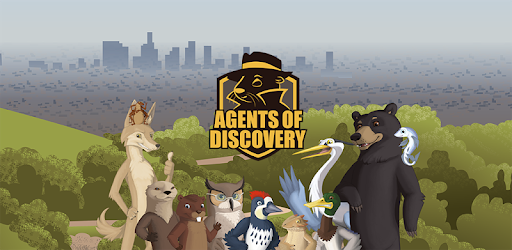
The Agents of Discovery application is a free downloadable app that gives users a fun and interactive way to explore the Berryessa Snow Mountain National Monument! It was developed as an interactive tool to encourage the public, kids and adults, to explore natural areas around them. There are over 70 missions available to play within California alone, including three located within the Berryessa Snow Mountain National Monument boundaries! The application uses augmented virtual reality in combination with an educational gaming platform that encourages kids and adults to discover nature through completing “missions” using the environment around you. You can download the app on almost any mobile device and once it is, you don’t need to have cell service or Wi-Fi to be able to use it.


The three missions in the Berryessa Snow Mountain National Monument include Cowboy Camp, Cache Creek Natural Area and the Upper Lake Ranger Station. Users of the app assume the role of a secret agent on a mission while picking up clues and solving mysteries using the natural world around them. But, please remember to stay on the trail and always be aware of your surroundings, especially while you’re using the app. And, if you’re stuck indoors, there are other missions available that you can play and explore from home.


Your agent will guide you through each mission and to find a challenge, follow the arrows on your screen. The challenge markers will change color as your get closer to them. If you need help, your agent will be able to give you clues. Prizes are awarded as the secret agents complete the educational missions. The app uses technology, something that a lot of people are comfortable with; to inspire them to explore nature, something that they may not be as comfortable with. There are missions that help you explore and learn, missions that teach about fire safety and missions that teach about conservation. Even celebrities like Betty White and Al Roker promote fire safety by tweeting about the Smokey the Bear Mission. The Agents of Discovery website also lists missions all over the word including others in the United States, Canada, New Zealand, India, Australia and the Cook Islands.


To learn more about the application itself, please visit the Agents of Discovery website, and to learn more about using the app within the Berryessa Snow Mountain National Monument, click here.


If you have questions about Berryessa Snow Mountain National Monument that you would like us to address, please email them to Nate Lillge (nlillge@tuleyome.org) or Kristie Ehrhardt (kehrhardt@tuleyome.org). More information can be found at www.BerryessaSnowMountain.org.

RECENT ARTICLES
By Ellen Jenkins July 2, 2026
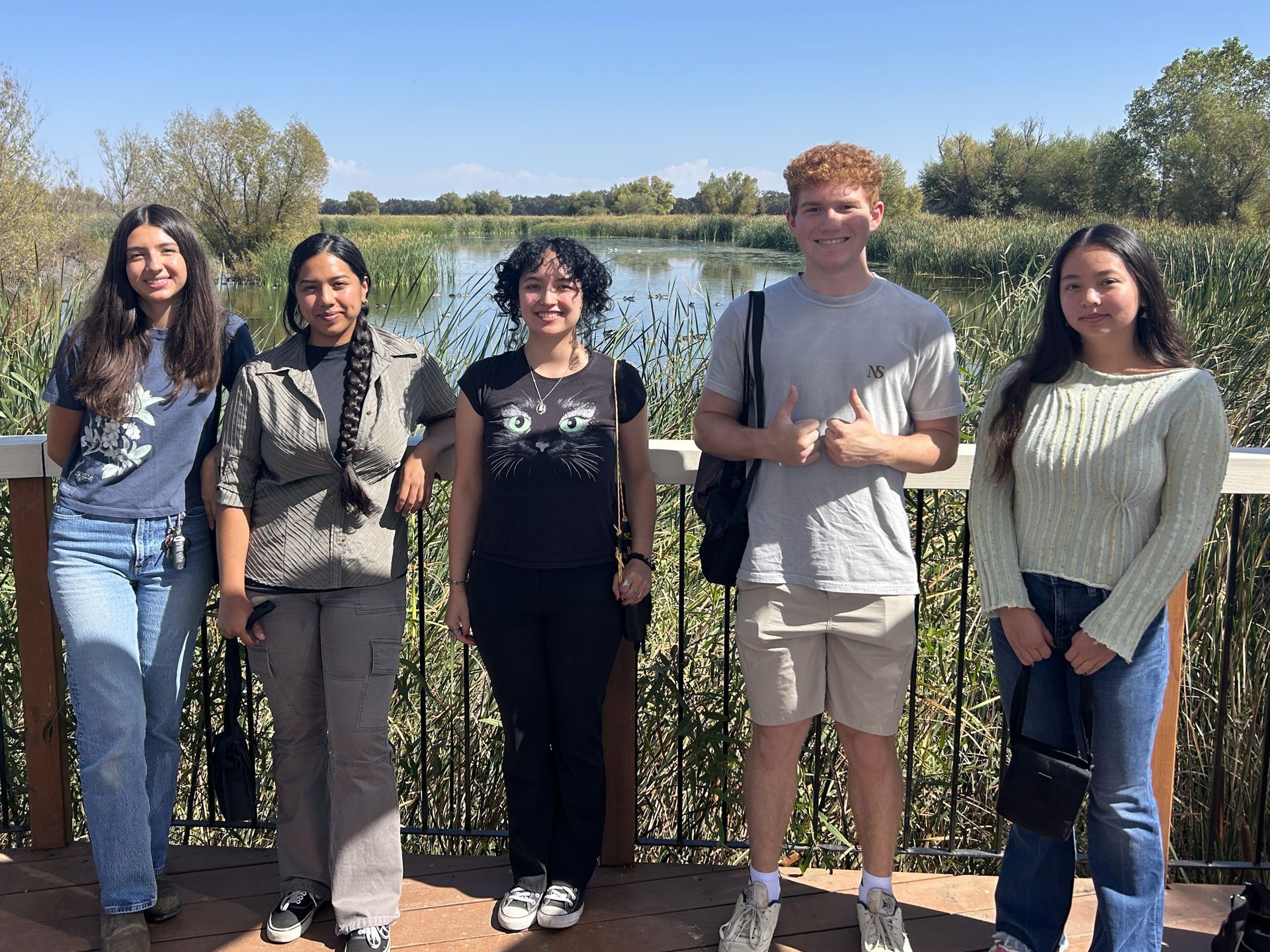
From left to right, Horticulture Interns Ellen Jenkins, Rithika Warrier, and Diego Barraza Hernandez, with Education Associate Geoff Benn, who coordinates the internship program. From September to June, I worked as a Horticultural Intern at Tuleyome. Each week at the Woodland Regional Park Preserve, I would meet with my mentor Teri Barry. Over the course of the year, we worked together identifying, documenting, and analyzing the preserve's growth. Through this opportunity, I gained experience in hands-on restoration efforts, familiarity with plant taxonomy and classification, and community outreach.
By Kristie Ehrhardt July 2, 2026
I’m sure you already know that the Bald Eagle is used as a symbol of our Nation’s freedom, strength, perseverance and independence. It is said that our founding fathers chose the Bald Eagle to adorn our Great Seal because it is indigenous to North America and if you look closely at it, you’ll see that it is holding 13 arrows and an olive branch simultaneously symbolizing the power of war and the power of peace. But, what about our national mammal? Er, maybe you didn’t even realize that we had a national mammal… President Barack Obama designated the American Bison as our national mammal in May of 2016. It too is endemic to North America and in prehistoric times, millions of them roamed through roughly two-thirds of the United States. Their range was known as the “great bison belt” - a stretch of habitat that encompassed the forests of Alaska, the grasslands of the North American plains and stretched from the Great Basin east to the eastern Appalachian Mountains. Side note - I’m just gonna come clean right now and tell you that the historic range of the American bison, American Buffalo or just plain bison or buffalo does NOT include the Berryessa Snow Mountain National Monument (Monument). I’m supposed to be writing about the Monument region and I picked a topic that is clearly not there but it’s important and they are impressive so please don’t tattle. Another side note - the American Bison and the American Buffalo are one in the same and both names can be used interchangeably. Its scientific name (genus and species) is actually Bison bison so I guess calling them bison is probably more scientifically accurate but either works. Bison are North America’s largest land animal; an adult male averages about 2,000 pounds - that’s a ton (thanks Schoolhouse Rock, I will never forget this one!), are about 12 feet long from nose to rump and about six feet tall. Females max out at around 1,000 pounds and are a little over nine feet long. In the wild bison can live ten to twenty years. Both females and males have massive forequarters and sport what looks like a shaggy, long-sleeved sweater. Both sexes have short, curved horns that are an integral part of their status in the herd and defensive strategy. During the snowy winters, bison display a dark brown winter coat and in the summer they show off their lighter brown summer-bods. Calves typically arrive from March through May depending on weather conditions. When they’re first born calves are an orangey-red color which earned them the nickname “red dogs”. Within a few months they become darker brown like their parents and their little horns start to poke through. Around this time they also begin to develop their iconic shoulder hump. The hump is made of solid muscle buttressed by elongated vertebrae. This dense network of muscles act as a powerhouse that allows the animal to swing its massive head from side to side and plow through icy snow to access buried forage enabling them to survive even the harshest winters. Although they are not known for keen eyesight, bison have superb senses of hearing and smell. As monumental (get it?) as these animals are, they are shockingly quick and agile. Bison have been clocked at running 35 miles per hour (!), they can spin and turn on a dime, leap over high fences and are incredibly adept swimmers. All these mad skills on a strictly vegetarian diet - that’s ruminant efficiency. For thousands of years, before the European settlers arrived, Native Americans of all tribes and regions revered the bison. They were the cultural, spiritual and resource backbone of indigenous societies across the United States. Every part of the animal was used; the meat was consumed, the hide was used for clothing, shoes and shelters, and the bones and hooves were used for tools and weapons. Even the sinew was used for sewing and bow strings. Everything was copacetic then came the Europeans with their domestic cattle diseases and thoughtless greed. Bison were hunted to near extinction within roughly just 100 years. Their numbers went from an estimated 60 million (!) to less than 550 individual animals by 1889. They were hunted mercilessly and their habitat destroyed, some say as a way to control the Native Americans by removing their primary resource. One of the buffalo’s biggest fans was President Teddy Roosevelt. In the early 1880’s he traveled to what is now North Dakota (shout out to my people!) to hunt. After recognizing the bison’s diminishing population numbers he co-founded the American Bison Society in 1905 to help conserve and protect this American emblem. For many years the few buffalo that remained were only found in national parks and preserves but primarily on Native American reservations. Had it not been for the willingness of tribes across the country to work with interested individuals and state and federal governments, the American Bison would be gone today. Much like the Bald Eagle, the bison is an authentic symbol of American character and as it turns out, another one of the greatest conservation success stories in U.S. history. The bison within the Yellowstone National Park boundaries are direct descendants of the original animals that roamed our country’s grasslands and are the only herd that still occupy their original prehistoric location. This free-ranging herd numbers approximately 5,500 animals and is the largest herd on public land. Recovery efforts paid off and today bison can be found in all 50 states including private and tribal lands, national parks and wildlife refuges.