
Women's Equality Day 2026 - Cathy Little
Kristie Ehrhardt • August 25, 2026

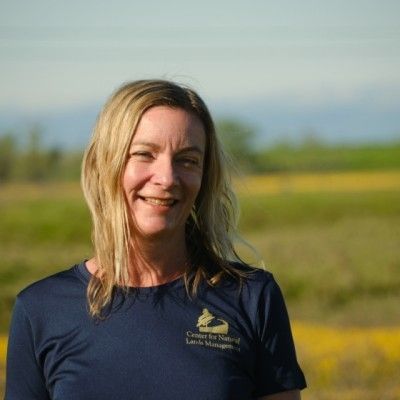
The 19th Amendment to the Constitution - granting women the right to vote - was certified on August 26, 1920. In commemoration of this, in 1973 Congress designated August 26 as "Women's Equality Day" to remind us of the heroic women who advanced the Women's Suffrage movement. In recognition of Women's Equality Day, Tuleyome is highlighting three women who are dedicated to conservation: Corky Quirk (NorCal Bats and Yolo Basin Foundation), Sheila Pratt (Cache Creek Conservancy) and Cathy Little (Yolo Habitat Conservancy). Hear about Cathy's journey below and learn about Sheila here and Corky here.


Please share in a round of applause for our friends for their passion and dedication to conservation.


I received my Bachelor’s Degree at UC Davis in Plant Biology and immediately moved into environmental consulting when I graduated. For the next few years, I had the opportunity to botanize and see lands throughout California. I was working on large river projects and became interested in restoration of riparian habitat and decided to go back to school and get my master’s degree at Chico State. I continued working on restoration projects and started to be more interested in conservation work. I spent the last 16 years working for the Center of Natural Lands Management where I directly managed and acquired lands with listed species and sensitive habitats and led the northern California group. Recently I made a career move to the Yolo Habitat Conservancy where I am now contributing to conservation work in my local County.


Through growing up in California I have been able to spend a large amount of time in vast beautiful wilderness areas, but have also witnessed conversion of many lands to development. I have always had a draw to natural lands and observing the amazing intricate ecosystems that they support. When I was working in environmental consulting on designing, building, and monitoring restoration sites, I saw these lands being transferred to entities that managed them in perpetuity, and I knew that I wanted to be part of the effort. I have spent most of my career now doing just that.


Throughout my time working in conservation, I have had so many long-term field ecologists inspire me to continue doing this work. Watching others work tirelessly over many years to manage and protect natural lands, and collaborate and share their knowledge, has been so motivating. There is nothing more enjoyable than spending a day in the field with other ecologists and sharing enthusiasm about some small moment of observation, and always learning some new tidbit of information about a certain species or behavior or management tool.


My advice to young women starting their career in the environmental/conservation/non-profit sector would be to just get out there and start gaining experience in whatever seems interesting and then collaborate and talk to as many people to learn about all the different opportunities. There are so many aspects of conservation and environmental work and the more time you spend working in it, the more you will be able to figure out how you want to contribute to the community as a whole. I would suggest taking as many opportunities as you can and working with as many different people as possible. Listening to people’s backgrounds, experiences, and perspectives can be valuable in navigating your path. I would recommend always advocating for yourself, being open and honest about your abilities, and committing to and communicating your beliefs regarding your work.

RECENT ARTICLES
October 2, 2026
 On August 29, USDA published a notice of intent to eliminate the 2001 Roadless Area Conservation Rule – the Roadless Rule, jeopardizing protections for 45 million acres of America's wildest forests , about a third of our national forests. Throughout Mendocino National Forest, 154,332 acres of Roadless Areas would lose protection, including nearly 30,000 acres within Berryessa Snow Mountain National Monument. What's at Stake These forests have only remained intact because of the 25-year commitment not to build roads and open these special areas to industry. Roadless areas provide clean drinking water to 60 million Americans. These forests store 20% of all carbon in U.S. national forests. The outdoor recreation economy generates $730 billion annually. Roadless areas are critical habitat for 1,600+ threatened species. We already have 370,000 miles of roads in forests with a multi-billion dollar maintenance backlog. Studies show wildfire ignitions are 4 times more likely near roads than in roadless areas. We Have Until September 21 st to Save America’s Roadless Forests This our opportunity to inform USDA that we are opposed to rolling back the Roadless Rule. Our goal is one million comments in support of the Roadless Rule What Can You Do? Submit Comments Supporting the Roadless Rule Directly to USDA or Click Here to Sign on to Tuleyome’s letter Our goal is to get 1,000,000 comments into USDA in support of the Roadless Rule! Information on How to Submit Public Comments for USDA Roadless Rule Step 1: Think about what types of comments you want to share with USDA. Here are some suggestions on what makes a good comment: Be specific about what roadless lands matter to you and why, whether for water, wildlife, recreation, wild fire prevention, cultural sites or old growth trees. Show how you will be personally harmed if these protections are removed. That harm can be direct, like losing access to a favorite place, or it can be health-related. Road-building and logging increase smoke, dust and polluted runoff that affect human health. Point to consequences, since roads lead to the removal of trees, severing connected wilderness corridors, erosion and higher fire risk. Call out contradictions such as: Forest service promises conservation while encouraging logging USDA states the Roadless Rule hinders wildfire management but more roads actually increase the likelihood of fire ignition points Feel free to borrow ideas from others or sample letters while maintaining your own voice, this is your opportunity to contribute and speak truth to power. Include your full name and address. Step 2: Go to the Regulations.gov site. This is the official federal government website to submit comments. Step 3: Copy and paste or upload your comments as a PDF. Step 4: Scroll to the bottom of the page, verify that you’re not a robot and hit submit. Consider keeping a copy of your comments for your record. As a reminder the comment period ends on September 21st.
By Shai Demus • September 10, 2026
 Yosemite National Park belongs to the people. It should not be carved up to benefit a private developer. The National Park Service is working on a new proposal to give up a quarter-mile strip of land inside Yosemite National Park in exchange for property elsewhere in California. What's the goal? To provide a private developer with a new road and direct access from his 83-acre planned real estate development abutting the park to one of Yosemite’s central roads. This proposal deserves the public’s attention. The property is owned by Kingsbarn Realty Capitol, whose CEO wants to build a road connecting the private property to Yosemite. Previous efforts to establish this private access were rejected, including in federal court. The National Park Service has repeatedly refused similar requests for more than two decades. Our National Parks should not be carved up for private profit. National Parks were established in this country to protect America’s most interesting and iconic places for everyone to access, not to provide special access or development opportunities for private interests. Your action is especially timely because the Park Service has acknowledged that no final decision has been made, meaning there is still an opportunity for public scrutiny and opposition. Any eventual land exchange should be subject to federal laws, environmental review, and public notification requirements. Tell the National Park Service: Keep Yosemite public We can’t allow a national park to be reshaped around the interests of a private developer. Yosemite is a national treasure. Its lands, wildlife, cultural resources, and landscapes belong to the American people, and they should remain protected for generations to come. We have seen this kind of proposal before, and the public and the courts rejected it. We must make sure it does not come back through the back door. Yosemite is worth protecting. Speak up and keep it public. TAKE ACTION: Tell Interior Secretary Burgum to Keep Yosemite Public! Here’s How: Call your elected officials. Here is a sample script: “Hi, my name is [NAME] and I'm a constituent from [CITY/ZIP]. I'm calling to urge [Representative/Senator NAME] to publicly oppose the National Park Service's proposed land exchange inside Yosemite National Park, which would give a billionaire private developer, Kingsbarn Realty Capital, new road access through park land. I'm also asking [him/her/them] to call on Interior Secretary Doug Burgum to reject any further privatization or sell-off of our public lands. Yosemite belongs to the public, not private developers. Thank you.” Send a letter or email. You can use this template: Dear [Representative/Senator NAME], I’m writing as your constituent to urge you to oppose the National Park Service’s proposed land exchange inside Yosemite National Park. This proposal would trade a strip of park land to provide Kingsbarn Realty Capital, a billionaire private developer, with new road access from an 83-acre private property to one of Yosemite’s central roads. This is not the first attempt to establish this private access – previous efforts were rejected, including in federal court, and the Park Service has denied similar requests for more than two decades. Our public lands exist to serve the public, not to create development opportunities for billionaires. I ask that you publicly oppose this proposal and call on Interior Secretary Doug Burgum to keep Yosemite, and all our national parks, fully public and protected for future generations. Thank you for representing our community on this issue. Sincerely, [NAME] [ADDRESS/ZIP] Not sure who represents you? Find your U.S. Representative and Senators here .
By Nate Lillge • September 10, 2026
I first learned of Tuleyome in 2015 when the Berryessa Snow Mountain National Monument was created and it was in the news. I thought then of what a marvelous and impressive, important effort this was by so many people, including Tuleyome. Importantly it was so inclusive, involving people of so many different backgrounds and interests, getting the buy-in from the community at large. Once I learned about Tuleyome (and the meaning of the name - deep home place) and some of its conservation efforts, I decided that I wanted to contribute, at least in a small way. I come from a farming and research background, and newly retired, wanted to be more involved in conservation efforts and Tuleyome was local and ideal! I think the aspect of Tuleyome’s work that most resonated with me is the focus on educational programs for young people and adults. As an older person, I know that experiences we have in childhood have life-long impacts. Let them be positive and enriching experiences and let them include conservation and the natural world! Young people have many demands on their time and attention and most have limited exposure to nature. Regardless of our career paths, an appreciation of nature is vital for the well-being of us all. As a docent helper this past spring I was touched by three students who said this was the first time they had been out in nature. In 2024 I had the opportunity to participate in the Certified California Naturalist Program (CalNat) and was inspired by the lead instructors Geoff Benn and Nate Lillge, and invited speakers. And, I love the new manual about the Berryessa Snow Mountain National Monument , especially the geology section. My donations can be used toward any need but I particularly want to support the educational efforts for young people. The National monument is a treasure in our backyards. Its creation and subsequent enlargement in 2024, reminded me of the adage “think globally, act locally”. The multi-pronged conservation efforts of Tuleyome and its commitment to a diverse regional community are such important and positive actions. I see Tuleyome as a small but powerful inspiring organization.