


Monumental Questions - Another Monumental Vegetable?
You betcha!
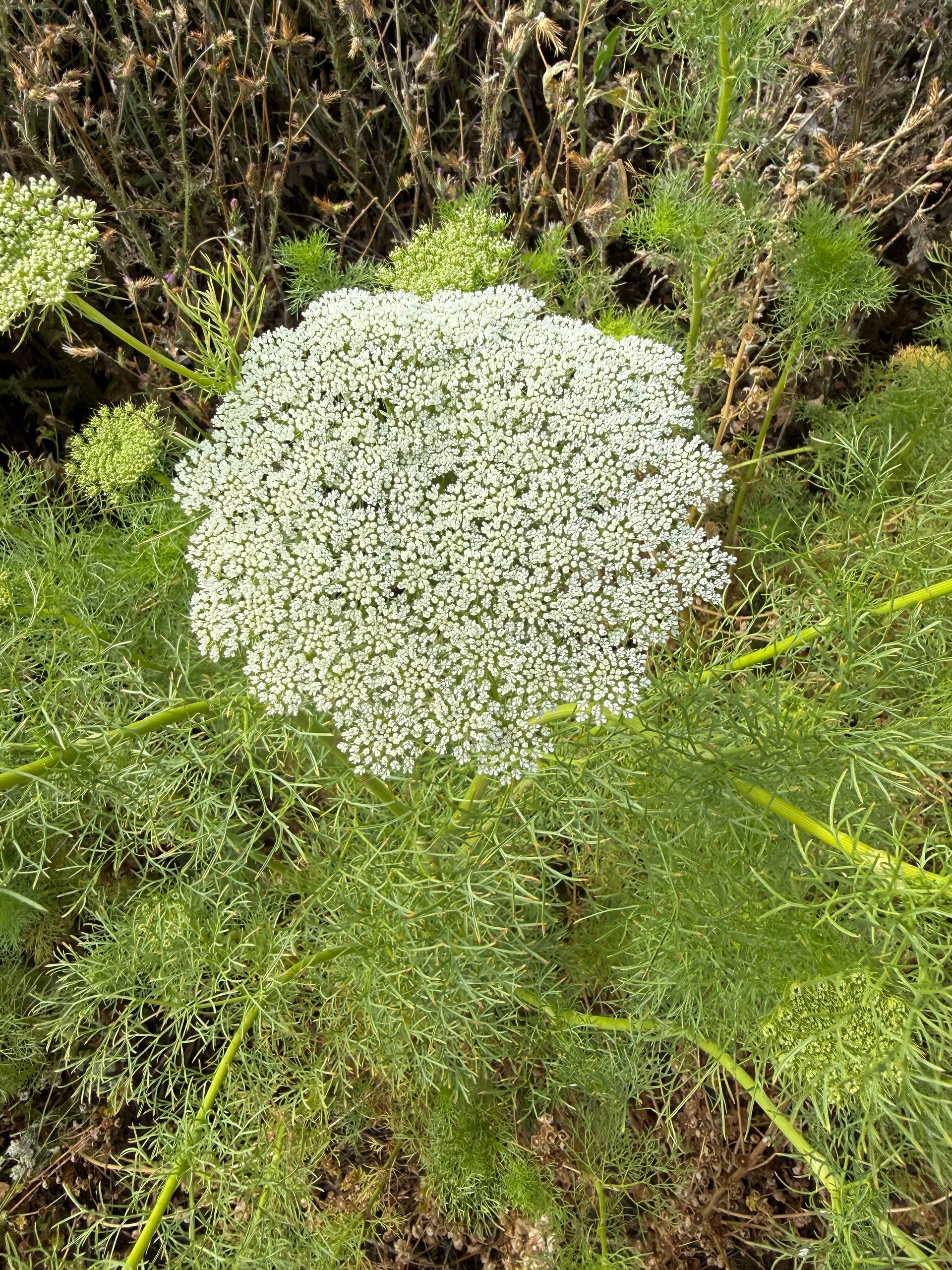
Wild carrot, also known as Queen Anne’s Lace, is a common sight within the Berryessa Snow Mountain National Monument region. With its straight and sturdy stalk, bright green, frilly leaves and white, flat-topped flower clusters, it is identifiable even from the limited viewing scope of a traveling car.
Queen Anne’s Lace (Daucus carota) belongs to the Apiaceae (carrot) family. All members of this family display flower clusters arranged in an upside-down umbrella shape called an umbel. It is native to Europe and is the plant that tasty cultivated carrots originated from. It was brought to North America for its medicinal purposes and has since naturalized across the continent in disturbed and natural areas in mountains, valleys and coastal areas. It can be so prolific that it outcompetes native plants and can also be mildly toxic to livestock.
Queen Anne’s Lace is an herbaceous biennial (it doesn’t flower until its second year and then dies) that can reach up to four feet tall in optimum conditions. The stem of the plant is bright green, straight and sturdy and is covered in short, coarse hairs which is a very helpful identifier. I recently learned a clever and helpful quip that I will never forget: Queen Anne has hairy legs (referring to the hair along the stems of the plant)! The tiny, white flowers all originate from the same point and splay out in an airy, flat topped cluster (umbel). Another identifying feature is that oftentimes (but not always) the flower umbels often have a single dark purple flower in the center of the cluster. This purple flower is not always present but when it is it can be used to positively identify the plant as Queen Anne’s lace. The leaves are finely divided which gives them a lacy appearance and look almost identical to our cultivated carrot plants.
Although wild carrots are edible, the whitish tap root isn’t as robust or flavorful as the cultivated carrots we are used to. Warning! There are plants such as poison hemlock that are incredibly similar looking so eating things in nature is never advised unless you can absolutely identify them! Poison hemlock has basically the same growth pattern as wild carrot however the stem of poison hemlock lacks the tiny hairs and mature plants have very definite purple splotches up and down the stems. All parts of poison hemlock are toxic but it is particularly potent in the seeds and roots. Poison hemlock is notoriously known as the poison that killed the Greek philosopher Socrates.
Edible cousins of wild carrot include plants such as caraway, celery, parsley and parsnips. Although the root of the wild carrot plant is edible, contact with the sap may produce an allergic reaction in some individuals that are sensitive to it. Native pollinators such as butterflies and bees appreciate the abundance of flowers for their nectar.
Wild carrot is currently blooming in all its glory so keep an eye out for it on your next trip to our favorite monument!
RECENT ARTICLES