


Monumental Questions - What Makes California Newts Special?
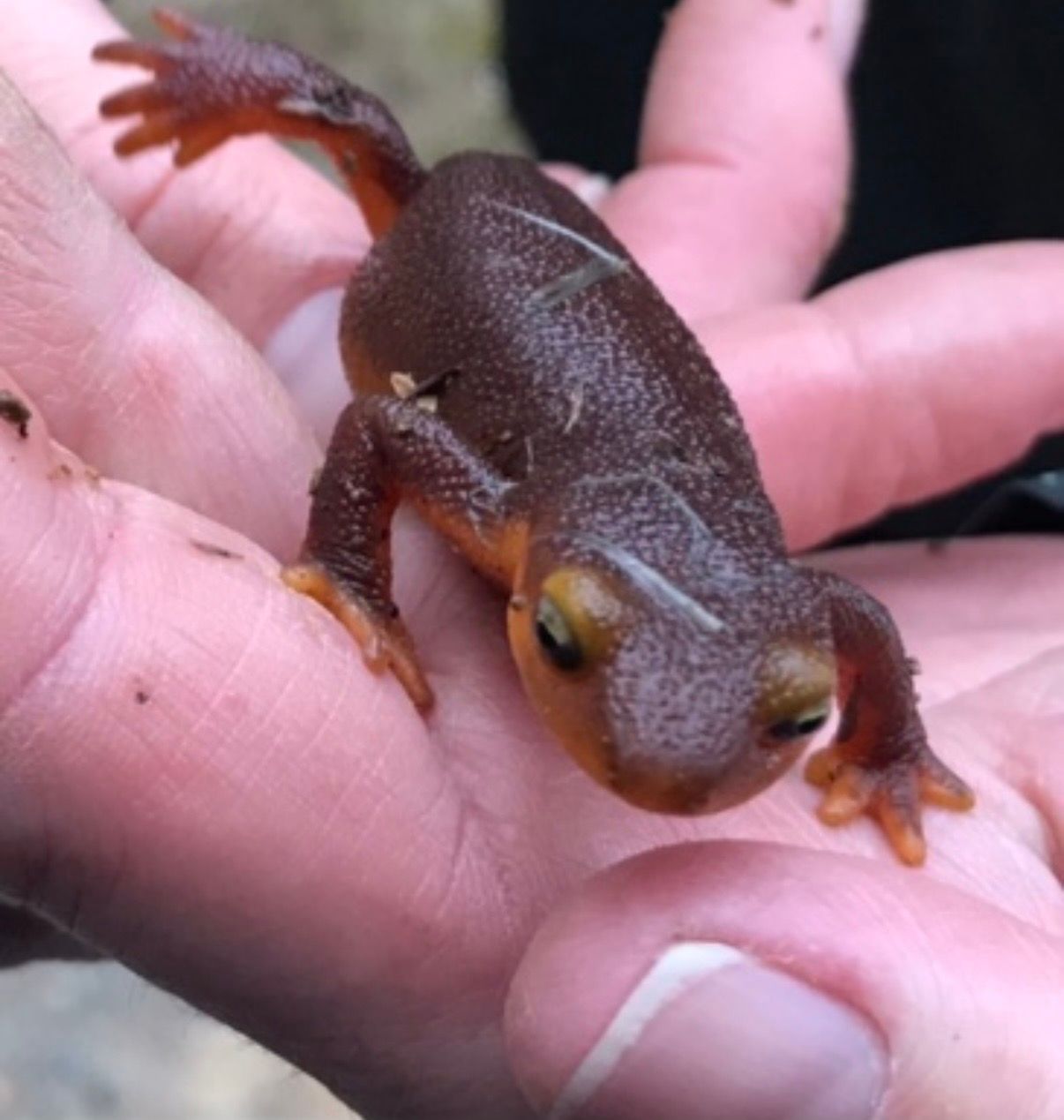
Driving around the Berryessa Snow Mountain National Monument one rainy day revealed a network of dirt roads that were slick as snnn… well, you probably know. The wet weather made driving less than optimal for the Subaru we were in but for our amphibian friends, the low-riding California newt, the warm, misty conditions were sublime.
California Newts (Taricha torosa) are endemic to California, which means that they are extra special because they are only found here. They occur below 6,000 feet along the Coast Ranges from Mendocino County south to San Diego County. They are also found in the foothills and western slopes of the Sierra Nevada in the San Joaquin Valley with a few isolated populations in southern San Diego County. They utilize both wetland habitat including natural and artificial pools and ponds, reservoirs, creeks and streams for breeding during winter and spring, and upland areas such as chaparral and woodland habitats where they spend summer and fall.
California Newts have stubby little toes attached to short, stocky legs. Adults range from about two and three quarters inches to about three and a half inches long, not including the tail. Their bellies and undersides of their neck and chin are bright golden yellow to orange with a reddish-brown to slate gray back. California Newts reproduce from late fall to early summer depending on rainfall amounts and habitat conditions. Adults migrate from their upland refugia to their preferred wetland to breed. Eggs are attached to submerged vegetation or under rocks and females can lay up to six masses of nearly 50 eggs a day. The eggs hatch in two to six weeks depending on water conditions and temperature. Larvae are aquatic and have gills and fins. After several months the larvae begin to exit the pond and set about metamorphosing into adults and do not return to the pond again until they are ready to breed.
Larvae eat small aquatic invertebrates and organic matter; adults eat insects, slugs, snails and worms as well as other amphibian eggs and larvae. Adult California Newts are highly toxic. Like other members of the genus Taricha, adults have glands on their skin that secrete the potent neurotoxin tetrodotoxin - the same toxin that is found in harlequin frogs and pufferfish. Side note, this makes them poisonous rather than venomous (like rattlesnakes). Tetrodotoxin is hundreds of times more toxic than cyanide and potent enough to kill most vertebrates. The toxin affects sodium channels and makes it so neurons are unable to fire which results in lethal muscle paralysis. One of the only predators of adult California Newts are garter snakes. Garter snakes are one of the very few organisms that have evolved to develop a resistance to the tetrodotoxin produced by the newts. Garter snakes can ingest the toxic newts with limited effects which has created an evolutionary arms race (coevolution). As the garter snakes develop stronger immunity to the toxins only the most poisonous news survive which in turn results in future generations of news with even stronger toxins. This leads to a population of garter snakes that have developed a resistance to the stronger toxin levels and and on it goes.
Loads of them were bumbling along the edges of the wet dirt road that rainy day. We made several stops to relocate those that were attempting to cross but seemed to stall out in the middle, always placing them facing the direction they were aimed. I don’t know if they were heading out to their natal ponds to mingle and breed, or on their way back to nap in their upland refugia but they were definitely enjoying the day. The California Newt is currently a California Species of Special Concern due to habitat loss and invasive non-native species introduction which makes seeing so many of these little stumpy legged tetrapods enjoying the Monument even even more groovy!
RECENT ARTICLES