
Women's Equality Day 2026 - Sheila Pratt
Kristie Ehrhardt • August 25, 2026

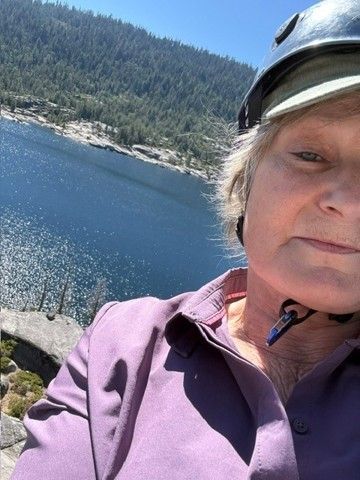
The 19th Amendment to the Constitution - granting women the right to vote - was certified on August 26, 1920. In commemoration of this, in 1973 Congress designated August 26 as "Women's Equality Day" to remind us of the heroic women who advanced the Women's Suffrage movement. In recognition of Women's Equality Day, Tuleyome is highlighting three women who are dedicated to conservation: Corky Quirk (NorCal Bats and Yolo Basin Foundation), Sheila Pratt (Cache Creek Conservancy) and Cathy Little (Yolo Habitat Conservancy). Hear about Sheila's journey below and learn about Corky here and Cathy here.


Please share in a round of applause for our friends for their passion and dedication to conservation.


Growing up in the western foothills of Sonoma wine country, I developed a lifelong appreciation for the outdoors and a deep respect for the independence of entrepreneurship, inspired by my father’s career as an insurance broker. My own entry into the insurance field was serendipitous. While navigating my college years and exploring potential career paths, I began assisting at a friend’s State Farm Insurance office. What started as a temporary role evolved into a professional mainstay; I eventually earned my agent’s license and managed that branch, along with several other offices in the area.


When our family relocated to Yolo County, I chose to step away from the insurance industry to focus on my husband and children. Embracing our new home, we spent much of our time outdoors, falling in love with the region's extraordinary agricultural abundance. In 2005, a friend mentioned an opening for part-time administrative support at the Yolo County Resource Conservation District (RCD). Stepping into that role marked a profound turning point. Witnessing firsthand the critical work being done to protect and restore our natural resources deeply resonated with me. It brought a clear realization: we are given only one planet, and how we manage and steward its resources matters immensely.


My father was my first and greatest inspiration. Growing up on several acres, I have fond memories of sitting in the soil with him, learning about the ecology of the small organisms around us. He possessed a true passion for cultivation, growing everything he could and constantly experimenting with unique plant varieties.


Paul Robins, currently the Executive Director of the Monterey County Resource Conservation District, was incredibly influential during my early days at the Yolo RCD and provided me with an excellent professional foundation. When Paul transitioned to Monterey, Dan Effseaf stepped in as Executive Director, offering me a broader perspective on leadership and district operations. Dan now serves as the District Manager of the Paradise Recreation and Park District, and both leaders have left a lasting impact on my approach to stewardship. When I transitioned to the Cache Creek Conservancy, Nancy Ullrey was an amazing example of a strong woman in business.


Over the years, we have completed numerous environmental restoration projects. In fact, many have succeeded so thoroughly that they have seamlessly melted into the surrounding landscape, looking as though they have always belonged there. However, my favorite daily memory is simply being on-site. The same friend who initially introduced me to the RCD eventually transitioned to the Cache Creek Conservancy (CCC) to support their financial administration. She reached out and encouraged me to visit, promising I would love the environment. She was entirely correct. It is a rare privilege to come to work every day at a place that genuinely brings you joy, essentially getting paid to be in your "happy place."


Given my administrative background, the milestone I am most proud of is the successful replacement of our administrative facilities. When the Cache Creek Nature Preserve opened to the public in 2000, they purchased a 20-year-old modular building for office space. It was already well past its prime. By the time I joined part-time in 2017, the structure suffered from severe leaks during rainstorms and lacked adequate insulation. Recognizing the need for a stable foundation, we began intentionally allocating capital for a new facility. By 2023, we had successfully saved enough to pay cash for our new administrative offices, a milestone achievement reached entirely debt-free.


I never actively aspired to become an Executive Director. I did not apply for the position, I did not seek the associated stress or high-level responsibilities, and on paper, I did not possess a traditional ecological background. I originally agreed only to serve as the Interim Director as a supportive gesture while the board conducted a comprehensive search. However, after two consecutive rounds of recruitment yielded no permanent match, the board formally requested that I accept the permanent appointment.


My professional strengths have always leaned toward behind-the-scenes operations; I viewed myself as a facilitator rather than a frontline visionary, specializing in putting the pieces of a great concept together. Public speaking, leading high-profile meetings, and networking lunches were far outside my comfort zone. The prospect of being the visible face of the Conservancy was quite daunting. Through this challenge, I learned a valuable perspective: we are ultimately all just individuals doing our best to serve the greater good. I found strength in Winston Churchill’s insight that "Fear is a reaction. Courage is a decision." Every day, I choose to lean into the discomfort and tackle the most challenging leadership tasks first thing in the morning, which sets a positive, rewarding tone for the rest of the day. Despite having more to learn about this specialized industry, stepping into this role has been incredibly rewarding.


My foremost advice is to build a team of exceptionally talented, knowledgeable professionals, their expertise will elevate the entire organization. Because my background is rooted in administration rather than environmental science, I intentionally hire staff with strong technical backgrounds. While I occasionally joke that the administrative side of operations might face a steep learning curve when I eventually retire, I am entirely confident that our conservation and restoration initiatives will continue to thrive because of the exceptional team we have built.


It is inspiring to see so many women leading the way in this field. I often wonder if the nurturing and protective qualities naturally found in women that drive this career path, sparking a shared dedication to care for the Earth and protect the vital life forces that keep humanity healthy and thriving.

RECENT ARTICLES
October 2, 2026
 On August 29, USDA published a notice of intent to eliminate the 2001 Roadless Area Conservation Rule – the Roadless Rule, jeopardizing protections for 45 million acres of America's wildest forests , about a third of our national forests. Throughout Mendocino National Forest, 154,332 acres of Roadless Areas would lose protection, including nearly 30,000 acres within Berryessa Snow Mountain National Monument. What's at Stake These forests have only remained intact because of the 25-year commitment not to build roads and open these special areas to industry. Roadless areas provide clean drinking water to 60 million Americans. These forests store 20% of all carbon in U.S. national forests. The outdoor recreation economy generates $730 billion annually. Roadless areas are critical habitat for 1,600+ threatened species. We already have 370,000 miles of roads in forests with a multi-billion dollar maintenance backlog. Studies show wildfire ignitions are 4 times more likely near roads than in roadless areas. We Have Until September 21 st to Save America’s Roadless Forests This our opportunity to inform USDA that we are opposed to rolling back the Roadless Rule. Our goal is one million comments in support of the Roadless Rule What Can You Do? Submit Comments Supporting the Roadless Rule Directly to USDA or Click Here to Sign on to Tuleyome’s letter Our goal is to get 1,000,000 comments into USDA in support of the Roadless Rule! Information on How to Submit Public Comments for USDA Roadless Rule Step 1: Think about what types of comments you want to share with USDA. Here are some suggestions on what makes a good comment: Be specific about what roadless lands matter to you and why, whether for water, wildlife, recreation, wild fire prevention, cultural sites or old growth trees. Show how you will be personally harmed if these protections are removed. That harm can be direct, like losing access to a favorite place, or it can be health-related. Road-building and logging increase smoke, dust and polluted runoff that affect human health. Point to consequences, since roads lead to the removal of trees, severing connected wilderness corridors, erosion and higher fire risk. Call out contradictions such as: Forest service promises conservation while encouraging logging USDA states the Roadless Rule hinders wildfire management but more roads actually increase the likelihood of fire ignition points Feel free to borrow ideas from others or sample letters while maintaining your own voice, this is your opportunity to contribute and speak truth to power. Include your full name and address. Step 2: Go to the Regulations.gov site. This is the official federal government website to submit comments. Step 3: Copy and paste or upload your comments as a PDF. Step 4: Scroll to the bottom of the page, verify that you’re not a robot and hit submit. Consider keeping a copy of your comments for your record. As a reminder the comment period ends on September 21st.
By Shai Demus • September 10, 2026
 Yosemite National Park belongs to the people. It should not be carved up to benefit a private developer. The National Park Service is working on a new proposal to give up a quarter-mile strip of land inside Yosemite National Park in exchange for property elsewhere in California. What's the goal? To provide a private developer with a new road and direct access from his 83-acre planned real estate development abutting the park to one of Yosemite’s central roads. This proposal deserves the public’s attention. The property is owned by Kingsbarn Realty Capitol, whose CEO wants to build a road connecting the private property to Yosemite. Previous efforts to establish this private access were rejected, including in federal court. The National Park Service has repeatedly refused similar requests for more than two decades. Our National Parks should not be carved up for private profit. National Parks were established in this country to protect America’s most interesting and iconic places for everyone to access, not to provide special access or development opportunities for private interests. Your action is especially timely because the Park Service has acknowledged that no final decision has been made, meaning there is still an opportunity for public scrutiny and opposition. Any eventual land exchange should be subject to federal laws, environmental review, and public notification requirements. Tell the National Park Service: Keep Yosemite public We can’t allow a national park to be reshaped around the interests of a private developer. Yosemite is a national treasure. Its lands, wildlife, cultural resources, and landscapes belong to the American people, and they should remain protected for generations to come. We have seen this kind of proposal before, and the public and the courts rejected it. We must make sure it does not come back through the back door. Yosemite is worth protecting. Speak up and keep it public. TAKE ACTION: Tell Interior Secretary Burgum to Keep Yosemite Public! Here’s How: Call your elected officials. Here is a sample script: “Hi, my name is [NAME] and I'm a constituent from [CITY/ZIP]. I'm calling to urge [Representative/Senator NAME] to publicly oppose the National Park Service's proposed land exchange inside Yosemite National Park, which would give a billionaire private developer, Kingsbarn Realty Capital, new road access through park land. I'm also asking [him/her/them] to call on Interior Secretary Doug Burgum to reject any further privatization or sell-off of our public lands. Yosemite belongs to the public, not private developers. Thank you.” Send a letter or email. You can use this template: Dear [Representative/Senator NAME], I’m writing as your constituent to urge you to oppose the National Park Service’s proposed land exchange inside Yosemite National Park. This proposal would trade a strip of park land to provide Kingsbarn Realty Capital, a billionaire private developer, with new road access from an 83-acre private property to one of Yosemite’s central roads. This is not the first attempt to establish this private access – previous efforts were rejected, including in federal court, and the Park Service has denied similar requests for more than two decades. Our public lands exist to serve the public, not to create development opportunities for billionaires. I ask that you publicly oppose this proposal and call on Interior Secretary Doug Burgum to keep Yosemite, and all our national parks, fully public and protected for future generations. Thank you for representing our community on this issue. Sincerely, [NAME] [ADDRESS/ZIP] Not sure who represents you? Find your U.S. Representative and Senators here .
By Nate Lillge • September 10, 2026
I first learned of Tuleyome in 2015 when the Berryessa Snow Mountain National Monument was created and it was in the news. I thought then of what a marvelous and impressive, important effort this was by so many people, including Tuleyome. Importantly it was so inclusive, involving people of so many different backgrounds and interests, getting the buy-in from the community at large. Once I learned about Tuleyome (and the meaning of the name - deep home place) and some of its conservation efforts, I decided that I wanted to contribute, at least in a small way. I come from a farming and research background, and newly retired, wanted to be more involved in conservation efforts and Tuleyome was local and ideal! I think the aspect of Tuleyome’s work that most resonated with me is the focus on educational programs for young people and adults. As an older person, I know that experiences we have in childhood have life-long impacts. Let them be positive and enriching experiences and let them include conservation and the natural world! Young people have many demands on their time and attention and most have limited exposure to nature. Regardless of our career paths, an appreciation of nature is vital for the well-being of us all. As a docent helper this past spring I was touched by three students who said this was the first time they had been out in nature. In 2024 I had the opportunity to participate in the Certified California Naturalist Program (CalNat) and was inspired by the lead instructors Geoff Benn and Nate Lillge, and invited speakers. And, I love the new manual about the Berryessa Snow Mountain National Monument , especially the geology section. My donations can be used toward any need but I particularly want to support the educational efforts for young people. The National monument is a treasure in our backyards. Its creation and subsequent enlargement in 2024, reminded me of the adage “think globally, act locally”. The multi-pronged conservation efforts of Tuleyome and its commitment to a diverse regional community are such important and positive actions. I see Tuleyome as a small but powerful inspiring organization.